Diwali, Yoga, Durga Puja & More: India's 16 Treasures on UNESCO's Intangible Cultural Heritage List
Synopsis
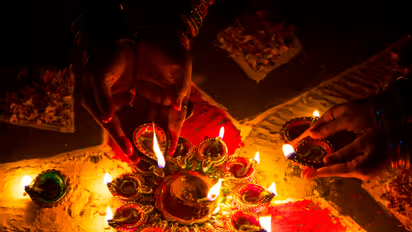
Diwali has been added to UNESCO’s Intangible Cultural Heritage list during a historic session at Delhi’s Red Fort, making it India’s 16th recognised cultural element alongside Kumbh Mela, Durga Puja and yoga.
In a landmark moment for India’s cultural legacy, Diwali or Deepavali — the festival of light celebrated across the country and the world — has been officially inscribed on UNESCO’s Representative List of the Intangible Cultural Heritage of Humanity. The announcement was made during a historic session of UNESCO’s Intergovernmental Committee, being hosted for the first time by India at Delhi’s Red Fort.
As the decision was read out, the 17th-century Mughal monument reverberated with chants of “Vande Mataram” and “Bharat Mata ki Jai,” capturing the emotional weight of the moment for delegates, cultural practitioners and attending students.
India Hosts UNESCO’s ICH Panel for the First Time
The 20th session of the Intergovernmental Committee for the Safeguarding of the Intangible Cultural Heritage (ICH) is underway from December 8 to 13, marking the first time India has hosted the prestigious global cultural forum.
The Red Fort — itself a UNESCO World Heritage Site — provided both symbolism and spectacle for the gathering, with cultural performances and traditional crafts on display as delegates from across the world convened to evaluate dozens of nominations.
Diwali's Global Recognition
Diwali's inscription places one of India’s most cherished traditions among the world’s protected cultural practices. The festival’s message — the triumph of light over darkness, good over evil — resonates across communities, faiths and regions.
For many, the recognition is more than a cultural milestone; it is an affirmation of a tradition that has shaped generations through ritual, mythology, family bonding and shared celebration.
India’s Growing ICH Legacy: The Full UNESCO-Inscribed List
With the addition of Diwali, India now has 16 cultural elements on UNESCO’s Representative List of the Intangible Cultural Heritage of Humanity. These elements represent oral traditions, festive events, performing arts, social practices and knowledge systems that form the living cultural fabric of the nation.
- Tradition of Vedic Chanting (2008) – One of the world’s oldest unbroken oral traditions, preserved through rigorous recitation.
- Ramlila (2008) – The traditional theatrical enactment of the Ramayana, performed across northern India.
- Koodiyattam or Kutiyattam (2008) – Kerala’s classical Sanskrit theatre, one of the world’s oldest surviving dramatic traditions.
- Ramman (2009) - Religious festival and ritual theatre of the Garhwal Himalayas.
- Mudiyettu (2010) – Kerala’s ritual theatre based on the story of goddess Kali.
- Kalbelia Folk Songs and Dance of Rajasthan (2010) – The expressive desert tradition performed by the Kalbelia community.
- Chhau Dance (2010) – A semi-classical tribal martial dance from West Bengal, Jharkhand and Odisha.
- Buddhist Chanting of Ladakh (2012) – Ritual recitations by Buddhist lamas and the monastic community of Ladakh.
- Sankirtana, Ritual Singing and Drumming of Manipur (2013) – A spiritual musical form integral to Vaishnavite practices.
- Traditional Brass and Copper Craft of Thatheras of Punjab (2014) – The ancient craft tradition of metal utensil making.
- Yoga (2016) – India’s ancient system of physical, mental and spiritual discipline.
- Nawrouz (2016) – The Persian New Year celebrated across regions, including parts of India.
- Kumbh Mela (2017) – The mass Hindu pilgrimage and ritual gathering at the confluence of sacred rivers.
- Durga Puja of Kolkata (2021) – The elaborate festival showcasing artistic creativity, community participation and devotional rituals.
- Garba of Gujarat (2023) – A circular devotional dance celebrating feminine divinity during Navratri.
- Diwali or Deepavali (2025) - The newly added festival of light, celebrated across India and by the global Indian diaspora.
Strengthening India’s Cultural Footprint
Diwali's recognition aligns with India’s expanding role in shaping global cultural diplomacy. Each new inscription not only protects traditional practices but also ensures that communities practising them receive visibility, support and validation on an international platform.
As the Red Fort hosts the ongoing UNESCO session, India’s intangible heritage continues to glow brighter — now with the added radiance of Diwali, a festival whose light has been officially acknowledged as a treasure of humanity.
Stay updated with the Breaking News Today and Latest News from across India and around the world. Get real-time updates, in-depth analysis, and comprehensive coverage of India News, World News, Indian Defence News, Kerala News, and Karnataka News. From politics to current affairs, follow every major story as it unfolds. IMD cities weather forecastsRain Cyclone Asianet News Official App