Red Fort Blast: How Al Falah University Became a Medical College Charging ₹16.37 Lakh for MBBS
Synopsis
Al Falah University in Haryana, once an engineering college, is under scrutiny after faculty linked to a white-collar terror module and the Red Fort blast were arrested. Investigators probe how a reputed campus became a terror hub.
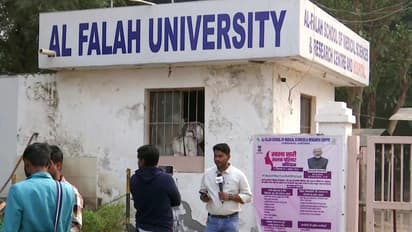
Al Falah University, a private institution in Haryana, has come under the scanner following the bust of a “white-collar terror module” and the deadly blast near Delhi’s Red Fort on Monday evening. Investigators are probing how the university may have turned into a possible hub for highly-educated individuals allegedly involved in terror activities.
From Engineering College to University
Al Falah University started as an engineering college in 1997 in Dhauj village, a Muslim-majority area of Faridabad. The university officially came into existence in 2014, after being established by the Haryana Legislative Assembly under the Haryana Private Universities Act, 2006.
Run by the Al Falah Charitable Trust, which was set up in 1995, the institution’s engineering college received an 'A' category accreditation from the University Grants Commission's National Assessment and Accreditation Council (NAAC) in 2013.
The university has since expanded to include the Al Falah Medical College, which began its MBBS programme in 2019 after receiving approval from the National Medical Commission. The MBBS course fees are Rs 16.37 lakh for the first four years and Rs 9 lakh for the final year, while a two-bed hostel room costs Rs 3,10,000 annually.
Campus Infrastructure and Courses
Spread over a 76-acre campus, Al Falah University hosts three colleges:
- Al Falah School of Engineering and Technology
- Brown Hill College of Engineering and Technology
- Al Falah School of Education and Training
The university also operates a small hospital with 650 beds, offering free medical treatment. Facilities include MRIs, CT scans, and advanced blood investigations.
In terms of student intake, the university offers 888 engineering seats, 200 MBBS seats annually, and 50 MD seats.
Leadership and Governance
The Chancellor of the university, Jawad Ahmad Siddiqui, also serves as the chairman of the Al Falah Charitable Trust and managing director of Al Falah Investments Limited.
The current registrar is Mohammad Parvez, and the vice-chancellor is Bhupinder Kaur Anand.
According to observers, Al Falah University initially positioned itself as an alternative to institutions like Aligarh Muslim University and Jamia Millia Islamia for minority students seeking quality education. Its website emphasizes providing “world-class education…designed to develop intellectual abilities and good social, moral, and ethical values.”
Links to Terror Investigations
Authorities have arrested several individuals connected to the university as part of the “white-collar terror module,” including:
- Dr Muzammil Ganaie – linked to Jaish-e-Mohammed and Ansar Ghazwat-ul-Hind
- Dr Shaheen Sayeed – linked to terror activities
- Dr Umar Nabi – assistant professor and driver of the Hyundai i20 that exploded near Red Fort
Additionally, Maulvi Ishtiyaq, a preacher from Haryana, was detained for allegedly storing explosives in his rented home near the university. Officials said he conducted religious sermons on campus and that over 2,500 kg of ammonium nitrate, potassium chlorate, and sulphur were recovered from his residence.
Investigators allege that Dr Ganaie and Dr Nabi were responsible for storing the explosives, raising concerns about how a reputed private university became a potential hub for terror-related activity.
University Response
Al Falah University has distanced itself from the arrested faculty members, stating that its association with them was strictly professional.
In an official statement, the university said:
“We wish to make it clear that the university has no connection with the said persons apart from them being working in their official capacities with the university. Moreover, the university is extending its full cooperation to the concerned investigating authorities to enable them to arrive at a logical, fair, and conclusive determination in the matter pertaining to national security," the statement said.
“We also want to make it loud and clear that as a responsible institution, we stand in solidarity with the nation and reaffirm our unwavering commitment to the unity, peace, and security of our country,” it added.
Stay updated with the Breaking News Today and Latest News from across India and around the world. Get real-time updates, in-depth analysis, and comprehensive coverage of India News, World News, Indian Defence News, Kerala News, and Karnataka News. From politics to current affairs, follow every major story as it unfolds. IMD cities weather forecastsRain Cyclone Asianet News Official App