Delhi News: Rekha Gupta's Strong Message To Congress Amid SIR Voter List Controversy
Synopsis
Delhi CM Rekha Gupta defends the Election Commission amid the SIR voter list controversy, citing support from 124 former civil servants as opposition parties raise concerns over electoral procedures and transparency.
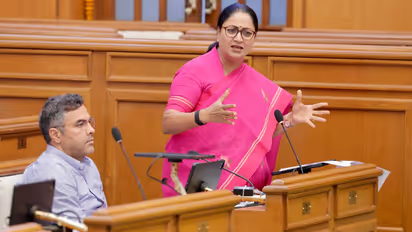
Delhi Chief Minister Rekha Gupta has defended the institutional credibility of the Election Commission of India (ECI), criticising the Congress and its allies over their questions about the country's electoral process. She said the credibility of Indian democracy should not be compromised to suit the political interests of the opposition.
In a social media post, Gupta referred to a statement by 124 former IAS, IFS and other allied services officers who backed the Election Commission's institutional impartiality and credibility. She stressed that accurate electoral rolls, transparent procedures and strong institutions are essential for conducting free and fair elections.
The remarks come amid an ongoing political debate over the Special Intensive Revision (SIR) of electoral rolls and allegations concerning the fairness of election procedures.
124 Former Officers Extend Support To Election Commission
On October 10, 2026, 124 former civil servants reportedly issued an open letter supporting the Election Commission. They questioned allegations of electoral malpractice and emphasised the need for credible evidence when making claims about irregularities.
The former officers also pointed to safeguards built into India's electoral system. These include the presence of polling agents, procedures for sealing electronic voting machines (EVMs), security arrangements at strongrooms and verification of Voter Verifiable Paper Audit Trail (VVPAT) slips.
Their position was that allegations concerning elections should be assessed on the basis of facts and evidence, taking established safeguards into account.
Why Is The SIR Electoral Roll Revision Controversial?
The Special Intensive Revision, or SIR, aims to review and update electoral rolls and correct inaccuracies. However, opposition parties have raised concerns about the deletion of names from voter lists and the transparency of the process.
Congress and other opposition leaders have questioned the Election Commission's functioning and called for Chief Election Commissioner Gyanesh Kumar to resign.
Supporters of the revision argue that maintaining accurate voter lists is necessary for the integrity of elections. The debate has therefore focused on how electoral rolls are updated, how eligible voters are protected and how complaints about possible irregularities are addressed.
These questions have placed transparency and procedural accountability at the centre of the wider discussion about electoral credibility.
Rekha Gupta's Message To Congress And Opposition Parties
Gupta argued that respect for democratic institutions should not depend on whether election results favour a particular political party. She accused the Congress and its allies of questioning the Election Commission when outcomes do not align with their political expectations.
According to the chief minister, free and fair elections require reliable voter lists, transparent processes and confidence in constitutional institutions. She maintained that allegations against the electoral system should be supported by evidence.
At the same time, concerns raised about voter-list revisions and election procedures require transparent examination. Addressing legitimate complaints through established processes is important for protecting eligible voters and maintaining public confidence.
The controversy highlights the continuing debate over the Election Commission's role, electoral safeguards and accountability in India's democratic system.
Stay updated with the Breaking News Today and Latest News from across India and around the world. Get real-time updates, in-depth analysis, and comprehensive coverage of India News, World News, Indian Defence News, Kerala News, and Karnataka News. From politics to current affairs, follow every major story as it unfolds. IMD cities weather forecastsRain Cyclone Asianet News Official App