Toxic Delhi: Time to adopt lessons from Singapore
Synopsis
Delhiites are facing a health crisis due to the smog. State government has issued emergency measures. Singapore faced a similar situation in 2013.
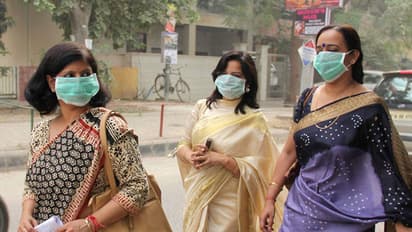
Post Diwali has seen Delhi's air quality plummeting into new low, and the capital of India has become a literal gas chamber of toxic air. The city is covered with dense smog which is refusing to clear out on its own and the government has been forced to impose 'emergency measures' for the health and safety of the residents of the city.
In fact, the experts are comparing smog with London's infamous 1952 smog that resulted in the premature death of 4,000 residents of the city.
Due to this poor air quality the government has introduced an emergency plan that includes shutting of schools for three days, work from home for employees, and all construction and demolition related work to be stopped to fight this hazardous situation.
Three years ago in 2013, Singapore, experienced a similar record-breaking haze and the city implemented a model plan which is highly effective and applicable in Delhi's current scenario. These guidelines implemented in Singapore were based on reports by Pollution Standards Index (PSI) which applies the same measure adopted by National Air Quality Index of India and therefore, will be effective against Delhi deadly smog. Both these Index takes into account six pollutants which are particulate matter (PM10) and fine particulate matter (PM 2.5), sulphur dioxide (SO2), carbon monoxide (CO), nitrogen dioxide (NO2), and ozone (O3).
As per the PSI report, National Environment Agency and Ministry of Manpower devised a set of guidelines to be followed during the period of dense smog. This health advisory is as per the one's individual health and their, and PSI level .
Following are the guidelines issued by the National Environment Agency of Singapore.
Less than 100 PSI: Considered good/moderate; suitable for normal activities.
101 – 200 PSI: Considered unhealthy; minimise, reduce or avoid prolonged or strenuous outdoor physical exertion.
201 – 300 PSI: Considered very unhealthy; minimise, reduce, avoid prolonged or strenuous outdoor physical exertion.
300 and above PSI: Considered hazardous; minimise or avoid outdoor activities.
For employees, the authorities have devised a specific guideline to reduce the health impact of the haze.
Less than 100 PSI: Considered good/moderate; suitable for normal activities of the employees and the employer must initiate preparatory measures to protect the safety and health of employees against the effects of haze.
101 – 200 PSI: Considered unhealthy; employees must minimise, reduce, avoid prolonged or strenuous outdoor physical exertion and employers must take risk mitigating measures such as use of mechanical aids, job rotation, instituting indoor rest breaks, ensuring adequate hydration etc.
201 – 300 PSI: Considered very unhealthy; employees must minimise, reduce, avoid prolonged or strenuous outdoor physical exertion and employers must take risk mitigating measures such as use of mechanical aids, job rotation, instituting indoor rest breaks, ensuring adequate hydration etc. If prolonged or strenuous outdoor work is not avoidable, and an employer still requires an employee to do so due to extenuating circumstances, masks should be provided.
300 and above PSI: Considered hazardous; employees must minimise or avoid outdoor activities and employers must take additional risk mitigating measures such as job redeployment, reducing the intensity and duration of outdoor work, institute regular breaks or deferment of non-essential jobs. If outdoor work is not avoidable, and an employer still requires an employee to do so due to extenuating circumstances, masks or appropriate respirators should be provided. Risk assessment should consider the additional risk posed by poor visibility for work activities such as lifting operations involving tower and mobile cranes.
These measures if adopted in Delhi and other cities in India, the air quality will have far less impact on the health of residents.
Stay updated with the Breaking News Today and Latest News from across India and around the world. Get real-time updates, in-depth analysis, and comprehensive coverage of India News, World News, Indian Defence News, Kerala News, and Karnataka News. From politics to current affairs, follow every major story as it unfolds. IMD cities weather forecastsRain Cyclone Asianet News Official App