Cyclone Arnab: Who Named It, What Does It Mean And How Are Cyclones Named?
Synopsis
Cyclone Arnab: How are cyclones named, what does Arnab imply, and who chooses which storm gets which name?
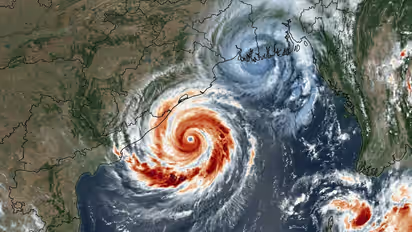
A deep depression over east-central and neighbouring southeast Bay of Bengal strengthened into Cyclone Arnab on October 26, the India Meteorological Department (IMD) announced. The storm is likely to travel near the Andhra Pradesh coast and cross as a very strong cyclonic storm. So what are cyclones called, what does Arnab signify, and who chooses a storm's name?
Who named Arnab?
Bangladesh has suggested the name Arnab, which is on the official list of names used for tropical cyclones across the North Indian Ocean, including the Bay of Bengal and the Arabian Sea. The list was adopted in April 2020 and includes 169 names from 13 nations. Each nation contributed 13 names. Participating nations include Bangladesh, India, Iran, Maldives, Myanmar, Oman, Pakistan, Qatar, Saudi Arabia, Sri Lanka, Thailand, United Arab Emirates and Yemen.

As qualifying cyclones emerge, the names are utilised in an agreed-upon sequence. Including a nation on the list does not mean a storm will hit that country, nor does it indicate where the cyclone will make landfall.
What does the name Arnab mean?
Arnab is usually related with the Bengali term meaning ocean or sea. But the official IMD list validates the name and provides its pronunciation as “Ornab”, but doesn’t offer a formal description. The name is part of a shared regional system in which nations contributing names supply them in advance, rather than naming storms one by one as they arise.
Who names the Cyclones in India?
The IMD’s Regional Specialised Meteorological Centre (RSMC) in New Delhi is responsible for designating tropical cyclones that form across the North Indian Ocean, including the Bay of Bengal and the Arabian Sea, once they reach the specified intensity threshold.
The centre uses names from a list agreed on by the participating nations. Not the country that is predicted to be hit by the storm, It is picked out of the set order. So a cyclone with a name supplied by Bangladesh can nevertheless be predicted to make landfall on the Indian coast. The name identifies the storm. Meteorologists will estimate the trajectory and likely landfall independently.
Why do we give cyclones names?
Names help meteorological organisations, emergency services, the media and the public recognise and talk about specific storms. A term like this helps to prevent misunderstanding, especially if there is more than one weather system moving through the area. It also makes it easier to communicate and follow alerts, predictions and evacuation advice.
When did the North Indian Ocean start naming cyclones?
Names for tropical cyclones in the North Indian Ocean were first introduced in September 2004, using names from eight nations. Later, the system was enlarged. A new list issued in April 2020 included five more nations on the panel, which now includes 13. Each country submitted 13 candidates; therefore, the present list has 169 names. The names are used in sequence, rather than being picked anew for each storm. When a qualifying cyclone develops, it is given the next name on the agreed list.

Cyclone names might give clues about where a storm may strike.
No. The name of a cyclone doesn’t tell you where it is going, how strong it is or where it will hit land. It's only an identification issued under the regional naming scheme. Bangladesh offered the name Arnab and the present storm is anticipated to track into the Andhra Pradesh coast. “It will be atmospheric and oceanic conditions that determine its eventual track, strength and location of landfall, not the country that submitted the name.”
Stay updated with the Breaking News Today and Latest News from across India and around the world. Get real-time updates, in-depth analysis, and comprehensive coverage of India News, World News, Indian Defence News, Kerala News, and Karnataka News. From politics to current affairs, follow every major story as it unfolds. IMD cities weather forecastsRain Cyclone Asianet News Official App