Climate change: How agricultural boom plays significant role in India's climate challenge
Synopsis
India's agriculture sector, while crucial for food security, is contributing significantly to greenhouse gas emissions and environmental damage.
India has an ever growing population and while attempts to feed them by reducing dependence on food imports, its agricultural sector is taking a devastating toll on the environment. The aggressive expansion of farmland, increased use of chemical fertilizers, and water-intensive practices like paddy cultivation are not only degrading the soil but also accelerating climate change.
Agriculture contributes 16-18% to India's GDP, making it the second-largest contributor to the country's greenhouse gas emissions. Total emissions due to agriculture increased by 4.5% between 2016 and 2019, reaching 2,647 MtCO2e.
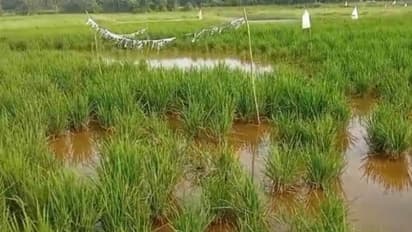
India is the second-largest producer and consumer of paddy in the world, with a cultivated area of 40.87 million hectares. However, paddy cultivation leads to significant methane emissions, estimated at 60 million tons per year. This practice also contributes to increased emissions of nitrous oxide and soil degradation.
The excessive use of chemical fertilizers has led to increased pollution, groundwater contamination, and health problems. Nitrates, ammonium nitrate, cobalt, boron, and manganese can cause respiratory issues, skin irritation, and damage to human health.
The Indian government has implemented several initiatives to mitigate these issues, including the System of Rice Intensification, Direct Seeded Rice, and the Soil Health Card scheme. Additionally, "per drop, more crop" measures aim to reduce water wastage in agricultural fields.
To promote sustainable agricultural practices, India needs to adopt mixed farming and multi-cropping methods to improve crop diversity and reduce soil degradation. A gradual shift to organic farming can reduce the environmental impact of fertilizers. Increasing awareness among farmers about the Soil Health Card scheme can improve soil health and farmers' income. Exploring alternative farming methods like hydroponics can address the challenges of a growing population.
Ultimately, it is crucial to recognize that the effects of climate change are deeply rooted in our agricultural practices. By adopting sustainable and environmentally conscious methods, India can reduce its environmental footprint while ensuring food security for its growing population.
Stay updated with the Breaking News Today and Latest News from across India and around the world. Get real-time updates, in-depth analysis, and comprehensive coverage of India News, World News, Indian Defence News, Kerala News, and Karnataka News. From politics to current affairs, follow every major story as it unfolds. IMD cities weather forecastsRain Cyclone Asianet News Official App