CAQM Sets Stricter PM Emission Standard of 50 mg/Nm³ for NCR Industries
Synopsis
CAQM has mandated a stricter, uniform Particulate Matter (PM) emission standard of 50 mg/Nm³ for key industries in Delhi-NCR via Statutory Direction No. 98. This aims to significantly reduce industrial pollution and improve regional air quality.
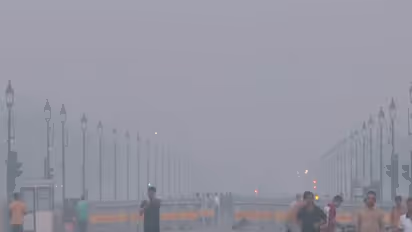
In a move to further strengthen industrial emission control measures across the National Capital Region (NCR), the Commission for Air Quality Management in NCR and Adjoining Areas (CAQM) has issued Statutory Direction No. 98, proposing a uniform and more stringent Particulate Matter (PM) emission standard of 50 mg/Nm³ for identified industries across Delhi-NCR, according to a release.
Industrial stack emissions are a significant source of aggravating PM levels in Delhi-NCR and also contribute to secondary particulate formation, thereby adversely impacting the air quality of the region. Since its inception, the Commission has undertaken a series of targeted measures including mandatory transition to cleaner fuels, prescribing emission standards for biomass and other fuel-based boilers and furnaces, and issuance of an approved fuel list through various Statutory Directions.
The Commission, considering the recommendations of the CPCB, based on the study of IIT, Kanpur and also the Technical Committee constituted by CPCB, is of the view that the particulate matter emission standard of 50 mg/Nm³ is technically achievable and environmentally necessary. This revised standard will reduce the emissions from industries significantly and will contribute to abatement of air pollution from industrial emissions leading to benefits for the people in the immediate vicinity of industrial sources and also improvement in the overall air quality of the region.
Revised Standard for Targeted Industries
According to the release, the Commission has directed that the maximum permissible limit of Particulate Matter (PM) emissions from 17 Categories of highly polluting industries identified by CPCB, Red Category (Medium and Large) air polluting industries, Food & Food Processing, and Textile industries having boilers/thermic fluid heaters and Metal industries having furnaces, operating in Delhi-NCR, shall be 50 mg/Nm³; provided that this standard shall not apply to those industrial units which have been prescribed PM emission standard of less than 50 mg/Nm3 under any applicable consent, direction or Statutory provision.
Implementation Timeline and Directives
The revised PM emission standard shall be applicable to the targeted industries. Large and Medium industries with effect from August 1, and the remaining industries with effect from October 1. Further, the respective NCR State Governments and GNCTD and the Pollution Control Boards in the States of Haryana, Uttar Pradesh and Rajasthan and the Delhi Pollution Control Committee have been directed by the Commission to ensure effective implementation of the Statutory Direction, particularly the targeted timelines for compliance with the revised PM emission standard and also undertake intensive IEC activities to sensitize stakeholders and spread awareness. (ANI)
Stay updated with the Breaking News Today and Latest News from across India and around the world. Get real-time updates, in-depth analysis, and comprehensive coverage of India News, World News, Indian Defence News, Kerala News, and Karnataka News. From politics to current affairs, follow every major story as it unfolds. IMD cities weather forecastsRain Cyclone Asianet News Official App