Air India crash report: Aviation expert rules out pilot error, warns of Boeing system fault
Synopsis
An Air India Boeing 787 crashed shortly after takeoff, killing all 241 onboard and 19 on the ground. Investigators found both engine fuel switches were inexplicably flipped to cutoff seconds after takeoff.
As investigators comb through debris and data from the Air India Flight AI171 crash in Ahmedabad, one voice is ringing out louder than most — not with blame, but with a warning.
"This isn't a mistake a trained pilot would make," says Mark D Martin, a veteran aviation safety expert and CEO of Martin Consulting. "It's something deeper. Possibly darker."
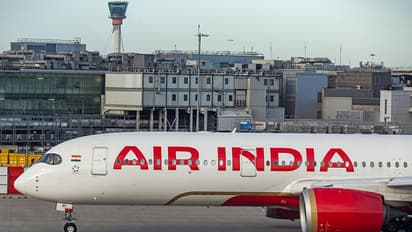
On June 12, just moments after takeoff, the Boeing 787-8 Dreamliner bound for London Gatwick lost both engines mid-air and crashed into a residential building near BJ Medical College. 241 people onboard and 19 on the ground lost their lives. It was one of the deadliest aviation disasters in recent Indian memory.
Now, a preliminary investigation report from India's Aircraft Accident Investigation Bureau (AAIB) reveals something deeply unsettling: both engine fuel switches were flipped to CUTOFF just seconds after takeoff, cutting fuel supply and power to the engines. One second apart. Three seconds into the flight.
What happened in that cockpit in those fatal seconds is unclear — but Martin is adamant about one thing.
'This is not human error'
"These aren't buttons you can bump by accident," he explains. The fuel cutoff switches are gated and guarded — designed precisely to prevent accidental movement. They require a very intentional, deliberate action. "To flip them, you'd have to lift a guard and then move the switch. And you'd have to do it twice. One second apart."
Martin points to the cockpit voice recordings, where one pilot is heard asking: "Why did you cut off the fuel?" The other replies: "I didn't."
"That exchange breaks your heart," he says. "They were as shocked as anyone."
Which leads to a chilling theory — could the aircraft itself have triggered the shutdown?
Martin believes it's possible. He suspects a potential system malfunction in the Boeing 787 fuel management that may have triggered a "Fuel Switch Runaway" scenario. In other words, a dangerous glitch that flips the fuel switches without pilot input.
A call for global attention
His concern isn't limited to this one crash. Martin is now urging international regulators — including the FAA, EASA, and India's AAIB — to probe deeper into the Boeing 787 Dreamliner's design and software systems.
"There are hundreds of these aircraft flying right now," he warns. "If this was a mechanical or software issue, it could happen again — anywhere."
He's also calling attention to the absence of cockpit camera footage in the preliminary report. Boeing 787s are equipped with internal cockpit cameras that monitor pilot movement. That footage, if available, could either confirm or rule out pilot interaction with the switches.
'So where is that footage?' he asks.
Pilots tried everything
The final moments of the flight, as reconstructed from data and audio, paint a picture of desperation and professionalism. After the engines failed, the pilots attempted to re-light them. One engine showed brief signs of recovery. A Mayday call was made at 08:09:05 GMT — and then, silence.
"The thrust levers were still in takeoff position when the plane went down," Martin notes. "These pilots fought to save the aircraft till the very last moment."
The Dreamliner crashed with an 8-degree nose-up pitch and level wings, suggesting the crew had not given up. They were trying to glide, to save themselves — and everyone on board.
Bigger than one crash
What happened on Air India AI171 isn’t just an aviation tragedy — it may be a technical red flag for Boeing, the airline industry, and global regulators.
"No pilot reaches for the fuel cutoff switch seconds after takeoff. If these switches moved without their control, we're staring at a potentially systemic design flaw," Martin warns. "And if we don't act now, it may cost more lives."
Stay updated with the Breaking News Today and Latest News from across India and around the world. Get real-time updates, in-depth analysis, and comprehensive coverage of India News, World News, Indian Defence News, Kerala News, and Karnataka News. From politics to current affairs, follow every major story as it unfolds. IMD cities weather forecastsRain Cyclone Asianet News Official App