AI can support doctors, not replace them: Union Minister Anupriya Patel
Synopsis
Union MoS Anupriya Patel said AI can support doctors and reduce their burden but not replace them, stressing AI literacy for health equity. Niti Aayog's VK Paul added AI would have the greatest impact on the health sector, improving clinical care.
AI to Support, Not Replace Doctors
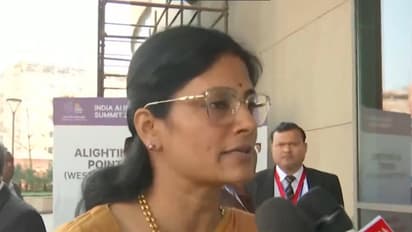
Union MoS for Health and Family Welfare Anupriya Patel on Tuesday stressed on the use of Artificial Intelligence in the health sector, adding that it cannot take place of doctors, but reduce the burden of their routine work. She also pushed for literacy in the health sector towards AI which can further help in achieving the goal of inclusivity and health equity. "AI can support the doctors and reduce the burden of their routine work, but it can never take their place. What we need today is that our medical fraternity needs to be AI literate and help us achieve the goal of inclusivity and health equity," Anupriya Patel told reporters.
Meanwhile, Niti Aayog member VK Paul asserted that AI would have the greatest impact on the health sector, noting that its tools would improve clinical care, strengthen health system functioning, enhance preventive approaches, and strengthen public health efforts. "AI is going to impact health sector the most and AI tools will improve our clinical care, health system functioning, preventive approaches as well as they will strengthen and energise the public health approaches. AI tools must be developed responsibly, they need to be trustworthy, validated, and they should be properly taken through the path of technical validity, clinical validity and utility," Paul told ANI.
AI as an Enabler for Health Equity at Summit
On Tuesday, while addressing the AI Impact Summit, Anupriya Patel highlighted the transformative role of artificial intelligence (AI) in healthcare. Speaking at the AI Impact Summit in the national capital, Patel asserted that India's governance model positions AI as an enabler and force multiplier, bringing the country closer to the goals of inclusivity and health equity. "The real measure of the power of AI lies in the extent to which it is able to touch, it is able to address the health inequities. That's the governance model we follow, in which AI becomes an enabler and a force multiplier, and it is able to take us closer to the goals of inclusivity and health equities," Anupriya Patel said.
Addressing India's Unique Healthcare Challenges
She noted that India faces unique challenges due to its vast and diverse population, the rural-urban divide, and the dual burden of communicable and non-communicable diseases. Patel emphasised that technology is being strategically integrated into the national healthcare framework to address these challenges, generating real-time alerts for disease outbreaks and strengthening disease surveillance nationwide. "India has unique challenges: our vast and diverse population, rural and urban divide, and also the dual burden of non-communicable as well as communicable diseases. So, when we look at these unique challenges, it becomes extremely important that we make use of technology, and we have had a comprehensive technological integration in our national healthcare framework, which we don't see as only adoption of technology, but a strategic response to the unique challenges that we have used," said Anupriya Patel.
The India AI Impact Summit is a five-day programme anchored in three foundational pillars, or "Sutras": People, Planet, and Progress. (ANI)
Stay updated with the Breaking News Today and Latest News from across India and around the world. Get real-time updates, in-depth analysis, and comprehensive coverage of India News, World News, Indian Defence News, Kerala News, and Karnataka News. From politics to current affairs, follow every major story as it unfolds. IMD cities weather forecastsRain Cyclone Asianet News Official App