Aaranyak Trains Manas Weavers in Modern Handloom Warping Technology
Asianet News Central | ANI
Published : Aug 31, 2026, 09:00 AM IST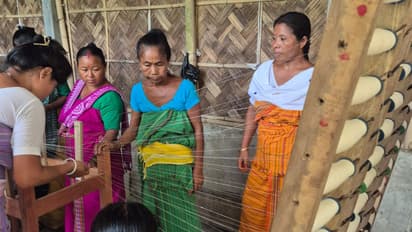
Synopsis
Aaranyak organised a training programme for 20 women weavers near Assam's Manas National Park, focusing on warping drum technology. The initiative aims to modernise handloom, reduce drudgery, and improve livelihoods for women in the region.
In a significant initiative to strengthen sustainable livelihoods around Assam's Manas National Park, Aaranyak organised a specialised training programme on warping drum technology and its applications in handloom weaving at Gorumara, Koklabari, under the Bhuyanpara Range of Manas National Park.The initiative seeks to bring appropriate modern technology into traditional handloom practices, while improving productivity, product quality and income opportunities for women weavers living in the fringe areas of the landscape. Twenty women handloom weavers from the Koklabari area participated in the training, which was designed to enhance their technical skills and reduce the physical drudgery associated with traditional weaving practices.
Modernising Traditional Weaving
The recently held programme focused specifically on the use of warping drums, a technology that can make the warping process more efficient, safer and less dependent on outdoor working conditions. Warping is an essential stage of handloom weaving. Traditionally, many weavers across the landscape carry out the process along roadsides or in open spaces, which can be time-consuming, physically demanding and risky, particularly during adverse weather conditions.Through hands-on demonstrations, the participants were provided with a step-by-step understanding of the process, beginning with bobbin winding and continuing through the completion of the warping activity.Benefits of the New Technology
While warping drum technology is not new to the wider handloom sector, its use is relatively new among the participating weavers. The adoption of the technology is expected to reduce drudgery, save time and energy, and improve the efficiency and consistency of their work.By combining traditional weaving knowledge with appropriate technology, the initiative aims to create better working conditions while strengthening the economic potential of rural handloom production.Empowering Women and Ensuring Sustainability
Women are central to the rural handloom sector, and strengthening their technical capacities can contribute significantly to household income, economic independence and long-term livelihood security. The initiative also seeks to ensure that improved skills and knowledge are passed on to future generations, helping traditional weaving practices remain relevant and economically sustainable.Expert Guidance and Participant Feedback
The training was conducted by Rekha Baro, a well-known handloom weaver and professionally qualified trainer from the region, who has extensive experience in handloom technology and its applications. She provided practical, step-by-step guidance to the participants throughout the programme.Sharing her experience, Pokhila Boro, one of the participating weavers, said, "It will now be very easy for us to do warping inside the room even if it is rainy or sunny days; it will reduce working hard in coming days."Rekha Baro said, "The trainees are learning quite attentively and are able to complete the module very fruitfully." She also shared her contact number with the trainees to provide assistance for any post-training requirements.Aaranyak's Broader Conservation Efforts
The purpose and objectives of the training were explained by M Firoz Ahmed, Director and Head, Tiger Research and Conservation Division (TRCD), as well as Herpetofauna Research and Conservation Division (HRCD), Aaranyak and Detsung Basumatary, Manager, TRCD and HRCD, Aaranyak. Other Aaranyak team members who actively participated in the programme included Ms Momita Narzary, Pankaj Das, Daimalu Basumatary, Barnali Baro, Bubli Rani Basumatary and Sonia Basumatary.The initiative is part of Aaranyak's broader efforts to promote alternative and sustainable livelihoods and nature-based solutions among indigenous peoples and local communities living around ecologically important landscapes. By strengthening community-based livelihoods and enhancing the capacities of women, such interventions seek to build greater economic resilience while contributing to long-term conservation outcomes.Aaranyak is committed to conserving the rich biodiversity and natural heritage of Northeast India by working closely with indigenous peoples and local communities and supporting sustainable livelihood opportunities that contribute to both community well-being and conservation. The Natural Resource Management Programme of Aaranyak at the Manas Landscape is supported by the International Union for Conservation of Nature (IUCN) and Kreditanstalt fur Wiederaufbau (KfW). (ANI)(Except for the headline, this story has not been edited by Asianet Newsable English staff and is published from a syndicated feed.)Stay updated with the Breaking News Today and Latest News from across India and around the world. Get real-time updates, in-depth analysis, and comprehensive coverage of India News, World News, Indian Defence News, Kerala News, and Karnataka News. From politics to current affairs, follow every major story as it unfolds. IMD cities weather forecastsRain Cyclone Asianet News Official App
Read more