1993 And After: How Mumbai's Resilience Shaped Security and Institutional Reforms
Synopsis
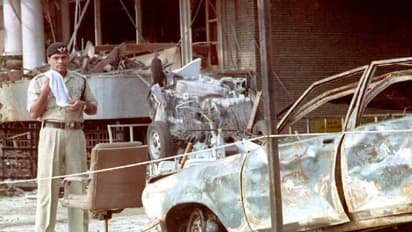
Just one day earlier, a series of 13 coordinated bomb blasts had torn through Mumbai's busiest streets, killing 257 people. That fact did not go unnoticed. Over the years, it has become a reference point for how India talks about the city and about itself.
New Delhi: The morning after the blasts, Mumbai woke up and moved again. On March 13, 1993, local trains ran on schedule, shop shutters rose, and people went back to work.
Just one day earlier, a series of 13 coordinated bomb blasts had torn through the city's busiest streets, killing 257 people. That fact did not go unnoticed. Over the years, it has become a reference point for how India talks about the city and about itself.
The term Black Friday attached itself to March 12 almost immediately. It carried the weight of the day without requiring explanation.
For the people who lost family members, it was simply the worst day of their lives. For the city as a whole, it became a permanent mark in public memory, a before-and-after line that no one who lived through it could ignore.
Resilience, in that context, was not a choice people made. It was what happened when a city of millions had no option but to stop. But the meaning that was attached to it over time was real.
Mumbai's capacity to absorb loss and keep moving became part of how the country understood what the city was. That identity shaped public expectations, political narratives, and even the tone of coverage every time something terrible happened there afterward.
The institutional side of the response was slower and less visible than the city's daily return to function. Reforms to policing, intelligence sharing, coastal surveillance, and criminal law did not arrive all at once. They came in stages over the years, shaped by the specific failures the 1993 investigation exposed.
MCOCA, passed in 1999, was one of the clearest institutional responses. It gave prosecutors the tools to go after organized criminal networks as whole entities rather than prosecuting individuals in isolation. It reflected a lesson the blasts had made unavoidable: that large criminal organizations operating across state and national lines needed laws built specifically for their scale.
The extradition of Abu Salem from Portugal in 2005 demonstrated that India's legal and diplomatic systems could work together on international cases and hold to the commitments they made.
India promised Portugal that Salem would not face the death penalty and that he would only be tried for the charges listed in the extradition request.
Those promises were kept. That record matters for future cases where cooperation with other countries is needed.
The criminal trial, despite its length, produced convictions that survived appeal. Yakub Memon's 2015 execution closed one part of the legal process. Salem's 2017 life sentence closed another. The system moved slowly, but it moved to a conclusion.
What 1993 built, institutionally, was a foundation that later security responses in India were built on top of. The failures exposed by the blasts created a list of problems that policymakers, police chiefs, and legislators spent years working through. Not all of them were solved. Some were only partly addressed. Others took a second major attack, in 2008, to fully force action.
The lesson that runs through all of it is the same one that the blasts first made clear: strong legal frameworks, coordinated intelligence, and consistent international cooperation are not optional features of a security system. They are the system. Without them, a city of millions is more exposed than anyone wants to admit.
Stay updated with the Breaking News Today and Latest News from across India and around the world. Get real-time updates, in-depth analysis, and comprehensive coverage of India News, World News, Indian Defence News, Kerala News, and Karnataka News. From politics to current affairs, follow every major story as it unfolds. IMD cities weather forecastsRain Cyclone Asianet News Official App