15 States to Adopt Gujarat's Banas Bio-CNG 'Waste to Wealth' Model
Synopsis
Gujarat's Banas Bio-CNG plant model, which converts cow dung into clean fuel and organic fertiliser, is now being adopted by nearly 15 states. The project aligns with PM Modi's 'Waste to Wealth' and 'Aatmanirbhar Bharat' visions.
Aligned with the vision of Prime Minister Narendra Modi on 'Waste to Wealth', Aatmanirbhar Bharat, and green energy, Gujarat's development model has emerged as a compelling national benchmark.
National Adoption and 'Waste to Wealth' Vision
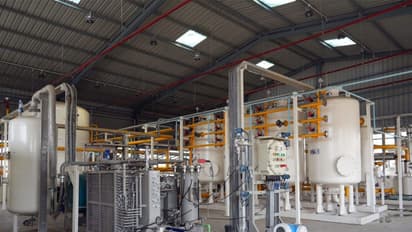
According to the Chief Minister's Office, the Banas Bio-CNG plant model is now being adopted by nearly 15 states across the country through the joint efforts of the Union Ministry of Jal Shakti and the Union Ministry of Cooperation. This project, developed by Banas Dairy, is transforming the rural economy by converting organic waste such as cow dung into clean fuel and organic fertiliser.
Gujarat Government's Budgetary Push
Recognising the vast potential of this innovative initiative, the Gujarat Government has placed the Bio-CNG sector at the top of its budget priorities. Under the leadership of the Chief Minister, the state government has made a special provision of Rs 60 crore to establish new plants through cooperative milk production societies. The objective of this budget allocation is to transform the dairy sector into a hub for clean energy production and to make the rural economy self-reliant. Notably, under this scheme, a phased plan has been proposed to establish around 10 Bio-CNG plants across the state.
The Proven Banas Model and Expansion
The Banas Bio-CNG plant in Banaskantha, with a daily processing capacity of 40 metric tonnes of dung, has been successfully operational for the past six years and stands as a proven model. Inspired by its success, work is underway to set up five large Bio-CNG plants in Banaskantha. Currently, out of the five planned plants, two have become operational, while the third is in the final stage of completion.
Each plant scientifically processes approximately 100 metric tonnes (1 lakh kilograms) of dung per day. Built at an estimated cost of Rs 50-55 crore, these plants are excellent examples of modern technology and infrastructure, demonstrating how ecology and economy can progress together, and how environmental conservation, farmer prosperity, and industrial growth can be achieved simultaneously.
Economic Benefits for the Rural Community
The Bio-CNG plants established in Banaskantha cover animal husbandry farmers' families from around 20-25 villages within a radius of approximately 20 kilometres, who regularly supply dung.
Farmers are paid Rs 1 per kilogram for dung, providing additional income to nearly 400-450 animal husbandry farmers' families. Around 13 tractor-trolleys are used for the collection and transportation of cow dung, each with a capacity of about 4 metric tonnes per trip, thereby generating employment and boosting local economic activities in rural areas.
Diversified Revenue Model
Moreover, the plant operates on a diversified revenue model based on multiple products, meaning income is generated not only from gas but also from fertilisers and other by-products.
Under this model, approximately 1,800 kilograms of compressed biogas (CNG) is produced daily and made available in the market at around Rs 75 per kilogram. In addition, about 25 metric tonnes of solid organic fertiliser and 75 metric tonnes of liquid organic fertiliser are produced, sold at approximately Rs 6 per kilogram and Rs 0.50 per kilogram, respectively. Together, these three products generate a daily revenue of over Rs 3 lakh for the plant, which can reach approximately Rs 12 crore annually.
Environmental Impact and a Greener Future
This innovative project of Gujarat is not only a breakthrough in the energy sector but also a revolutionary step toward environmental conservation. This model has the capacity to reduce approximately 6,750 tonnes of CO2e (carbon dioxide equivalent) greenhouse gas emissions annually, reflecting Gujarat's significant contribution in addressing the global challenge of climate change.
The convergence of clean fuel production, availability of chemical-free organic fertilisers, and scientific waste management is transforming the vision of 'Green Banaskantha' into the broader reality of 'Green Gujarat'.
(Except for the headline, this story has not been edited by Asianet Newsable English staff and is published from a syndicated feed.)Stay updated with the Breaking News Today and Latest News from across India and around the world. Get real-time updates, in-depth analysis, and comprehensive coverage of India News, World News, Indian Defence News, Kerala News, and Karnataka News. From politics to current affairs, follow every major story as it unfolds. IMD cities weather forecastsRain Cyclone Asianet News Official App