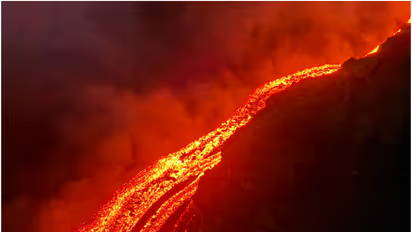
Mount Etna's renewed activity has also affected air travel in eastern Sicily.
Catania Airport, one of the main gateways for tourists travelling to Sicily, has been operating with restrictions amid concerns over volcanic ash. Ash clouds can create serious risks for aircraft, particularly because volcanic ash can damage aircraft engines.
Passengers travelling through Catania are therefore advised to check the latest flight information with their airlines before travelling to the airport.
American Tourist Dies After Lightning Strike On Mount Etna
The latest eruption comes after a tragic incident involving a 29-year-old American tourist from Kansas.
According to reports, the man was hiking above the tree line on Mount Etna on Sunday evening when a thunderstorm struck the area. He was reportedly in a restricted zone and was apparently attempting to get closer to the summit.
Emergency crews reached him by helicopter at around 8 pm local time and found him in cardiac arrest.
He was airlifted to Cannizzaro Hospital in Catania, where doctors were unable to revive him. He was later pronounced dead.
Authorities have not released his identity as they work to notify his family.
The incident has highlighted the risks of hiking on Mount Etna, particularly during periods of increased volcanic activity and unpredictable mountain weather.
Why Is Mount Etna So Dangerous?
Despite being a popular tourist destination, Mount Etna remains an active volcano and its conditions can change quickly.
Lava flows, ash emissions, volcanic gases, unstable ground and sudden thunderstorms can all pose risks to visitors. The danger can be even greater at higher elevations, where there may be little shelter and weather conditions can change within minutes.
Authorities have therefore continued to urge tourists and hikers to respect restricted areas and follow official safety instructions.
Mount Etna Eruption Captures Global Attention
The latest Mount Etna eruption has produced spectacular scenes of ash and glowing lava, once again showcasing the raw power of Sicily's famous volcano.
But the dramatic footage also comes with a warning. Mount Etna is not simply a tourist attraction; it is an active and unpredictable volcano.
With fresh lava flowing in Valle del Bove, ash being emitted from the Voragine Crater and restrictions affecting the surrounding area and Catania Airport, authorities are closely monitoring the situation.
For tourists hoping to see the eruption, experts and authorities continue to stress that the safest way to experience the spectacle is from authorised areas and at a safe distance.
Also Know 5 Most Unique Things About Mount Etna
- Europe's Tallest Active Volcano - Mount Etna rises to around 3,324 metres, making it the tallest active volcano in Europe.
- It Erupts Frequently - Unlike many volcanoes that can remain dormant for decades, Etna has frequent periods of volcanic activity, including lava flows and ash emissions.
- It Has Multiple Craters - Etna is not just one single crater. It has several summit craters, including the Voragine Crater, which has recently been emitting ash.
- Valle del Bove Is A Major Lava Zone - Valle del Bove is a huge natural depression on Etna's eastern side where lava flows can be particularly spectacular during eruptions.
- It Can Affect Air Travel - Volcanic ash from Etna can disrupt flights because ash clouds can be hazardous to aircraft. Catania Airport, a major gateway to eastern Sicily, can face restrictions during periods of increased activity.