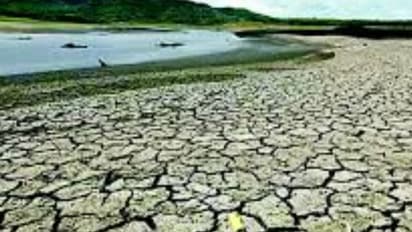
Reports from NITI Aayog and Jal Shakti Ministry warn that 21 major Indian cities are close to “Day Zero”, a complete water shutdown, as groundwater levels fall to critical lows, putting crores of lives at serious risk across urban India.
21 major cities in the country are on the verge of running out of water
Several of India's megacities and populated areas are fast losing their groundwater. They are heading towards 'Day Zero,' a situation of complete waterlessness, which has already started creating a huge crisis for crores of people.
213
Complete waterlessness
Recent data from NITI Aayog's Composite Water Management Index (CWMI) and the Jal Shakti Ministry's Dynamic Groundwater Resource Assessment Report is alarming. At least 21 major cities have dangerously low groundwater levels. Uncontrolled urban growth, filling up of wetlands, unplanned borewells, and climate change are pushing a huge part of our population towards extreme water shortage.
313
Area-wise water crisis details
1. Greater Hyderabad (Telangana): The country's most affected region. Talking about the current situation, the Jal Shakti Ministry's 2025-26 report has identified Hyderabad as the most distressed groundwater-stressed region in the country, leaving even a megacity like Delhi behind.
413
Impossible to run daily life
The impact: Authorities have declared 26 mandals and tehsils in Greater Hyderabad as 'over-exploited' or critical. Here, the water level has dropped so low that for ordinary people, daily life has become impossible without relying on water tankers.
2. Bengaluru (Karnataka): Silicon Valley's dry pipelines. The current situation: Once a city of over 260 lakes, Bengaluru now has only 80-81 lakes left. Thousands of borewells in this IT hub have completely dried up.
The impact: Strict rules on water use have been imposed in apartments and high-rises. Even after bringing water from the Kaveri river 100 km away and booking expensive private water tankers, the demand is not being met.
613
Drinking water crisis in the capital too
3. New Delhi & NCR: The Yamuna's pollution and a drinking water crisis. The current situation: For Delhi's population of about 3.3 crore, 21 groundwater units are in a 'critical' state. Delhi gets over 60% of its drinking water from the Yamuna river, which is severely polluted.
The impact: During summer, the Delhi Jal Board has to deploy over 1,000 water tankers daily. Fights over water and long queues have become a common sight, from slum areas to posh colonies.
4. Chennai (Tamil Nadu): Fear of a repeat 'Day Zero'. The current situation: In 2019, Chennai became the first major Indian city to face a 'Day Zero' situation when its four main reservoirs completely dried up. Despite learning from that, the city's water crisis is not over yet.
The impact: As Chennai's groundwater level drops, salty seawater is seeping into the ground, making even borewell water unfit for drinking.
813
Thirsty Mayanagari
5. Mumbai & Kolkata: The seven main lakes supplying water to Mumbai have seen their usable levels drop to just 9% to 10.35% of total capacity. This stored water can quench the city's thirst for only another 30 to 40 days. As a result, the administration has already imposed strict water rationing and restrictions across the city.
New crisis in coastal cities: With Mumbai's reservoirs now below 15% capacity, the water supply has to be cut. Everyone in Mumbai is pinning their hopes on the IMD's new monsoon forecast.
913
Groundwater level is dropping rapidly
Climate experts believe that without modernising desalination plants and wastewater treatment facilities, Mumbai's crisis could become a permanent fixture in the coming years. Meanwhile, in Kolkata, arsenic pollution and excessive water extraction are causing the groundwater level to drop rapidly.
1013
The dire consequences of this water crisis
1. Severe health risks: Every year, about 2 lakh people in the country die from drinking contaminated and unsafe water. The water crisis is also causing a multi-fold increase in diseases like typhoid, jaundice, and skin infections.
2. Economic disparity and 'water mafias': With no government supply, people are forced to spend a large part of their income on private water tankers. This has created a 'tanker mafia' that sells water by creating an artificial shortage.
1113
Major blow to hydropower projects
3. A slump in agriculture and power generation: With water levels in India's main reservoirs dropping below 50% of normal, irrigation and hydropower projects are taking a big hit.
4. Ecological damage: The complete drying up of wetlands is causing city temperatures to rise, which in turn makes heat waves even more severe.
1213
Atal Bhujal Yojana
Solutions and government action: The central government is working to tackle the crisis through the Jal Jeevan Mission (Urban) and the 'Atal Bhujal Yojana'. However, experts believe that for a long-term solution, we need to focus on:
Rainwater Harvesting: This means making it mandatory for every house and government housing complex to have infrastructure to channel rainwater back into the ground.
1313
Stop wasting water
Wastewater reuse: Currently, only 28% of the city's wastewater is treated. We need to increase this and use the treated water for industrial purposes and gardening.
Sponge City model: Following China's example, we need to build roads and footpaths in a way that allows water to easily seep into the ground.