Indian Flag Ratio: Why The Tricolour Must Always Follow The 3:2 Rule | All You Need To Know

Published : Aug 09, 2026, 06:41 PM IST

The Indian National Flag has a fixed length-to-width ratio of 3:2, according to the Flag Code of India. This means that for every three units of length, the flag must have two units of width. The rule applies regardless of size. 
PREV
16
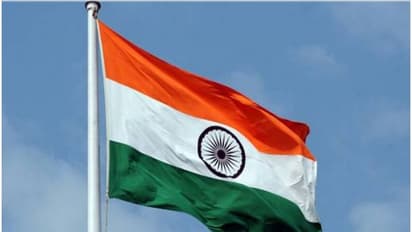
Indian flag and 3:2 ratio rule

The Indian National Flag may be seen in many different sizes, from a large flag flying high on a pole to a small one placed on a table. But there is one thing that does not change, its basic shape.

According to the Flag Code of India, the National Flag must be rectangular and its length-to-width ratio must always be 3:2. In simple terms, if the length is divided into three equal parts, the width must measure two of those parts.

This means the flag can be made bigger or smaller, but its proportions cannot be changed.

26
What does the 3:2 ratio mean?

The 3:2 rule is simple to understand.

If the length of a flag is 3 metres, its width should be 2 metres. If the length is 6 metres, the width should be 4 metres.

The same rule works with smaller measurements. A flag that is 900 mm long should be 600 mm wide, while one measuring 1,800 mm in length should have a width of 1,200 mm.

So, the key point is that the actual size can change, but the relationship between length and width remains the same.

The Ministry of Home Affairs specifically states that the flag can be of any size, provided its length-to-width ratio remains 3:2.

Why is the Indian flag rectangular?

The National Flag is not simply a coloured piece of cloth. Its shape and design are also defined by the Flag Code.

The Tricolour consists of three rectangular panels of equal width. The top panel is India saffron, the middle panel is white, and the bottom panel is India green.

At the centre of the white panel is the Ashoka Chakra, which is navy blue and has 24 equally spaced spokes. The Flag Code also says the Chakra should be completely visible on both sides of the flag and placed at the centre of the white panel.

Because the three bands have equal widths, keeping the overall shape correct is important when the flag is produced in different sizes.

36
What are the standard sizes of Indian flag?

The Flag Code lists nine standard sizes for the National Flag. They are:

  • 6300 × 4200 mm
  • 3600 × 2400 mm
  • 2700 × 1800 mm
  • 1800 × 1200 mm
  • 1350 × 900 mm
  • 900 × 600 mm
  • 450 × 300 mm
  • 225 × 150 mm
  • 150 × 100 mm

Every one of these measurements follows the same 3:2 ratio.

For example, the largest listed size is 6,300 mm long and 4,200 mm wide. At the other end, the smallest listed size is 150 mm long and 100 mm wide.

This shows why the ratio matters. The flag can be scaled up or down while retaining the same proportions.

Which flag size is used for cars and tables?

The Flag Code also gives specific intended uses for some of the smaller standard sizes.

The 450 × 300 mm flag is intended for aircraft on VVIP flights. The 225 × 150 mm size is intended for motor cars, while the 150 × 100 mm size is intended for table flags.

So, a flag used on a car does not simply have its dimensions chosen at random. The Code provides a standard size for that purpose.

The Ministry of Home Affairs also says that an appropriate size should be chosen depending on where the flag is being displayed.

46
Can the flag be made in any other size?

The important distinction is between size and proportion.

The Ministry of Home Affairs says the National Flag can be of any size, but the 3:2 length-to-width ratio must be maintained.

So, for example, a 4.5-metre-long flag would need to be 3 metres wide if the 3:2 ratio is being followed.

What should not happen is changing just one dimension. Stretching a flag to make it unusually long or compressing it to make it unusually short would change its proportions.

56
What rules govern the National Flag?

The use, display and hoisting of the Tricolour are governed by the Flag Code of India, 2002, along with the Prevention of Insults to National Honour Act, 1971. The Flag Code came into effect on January 26, 2002.

The Code has been amended over the years. For example, changes made in 2021 allowed the National Flag to be made from hand-spun and hand-woven or machine-made cotton, polyester, wool, silk or khadi bunting.

The rules also stress that the National Flag should be treated with dignity and honour.

66
The simple answer: 3:2

So, if someone asks what the length-to-width ratio of India's National Flag is, the answer is straightforward: 3:2.

For every three units of length, there should be two units of width.

Whether the Tricolour is displayed on a large flagpole, a motor car or a table, its size may vary, but its basic proportions remain the same. That simple ratio is one of the key details that helps preserve the correct shape and appearance of India's National Flag.

Stay updated with the Breaking News Today and Latest News from across India and around the world. Get real-time updates, in-depth analysis, and comprehensive coverage of India News, World News, Indian Defence News, Kerala News, and Karnataka News. From politics to current affairs, follow every major story as it unfolds. Get real-time updates from IMD on major cities weather forecasts, including Rain alerts, Cyclone warnings, and temperature trends. Download the Asianet News Official App from the Android Play Store and iPhone App Store for accurate and timely news updates anytime, anywhere.

Read more
Read more Photos on

Recommended Stories