Global Markets Rattled: Oil Soars Above $109 As Trump Escalates Iran Threats, Stocks Tumble Worldwide

Published : Apr 02, 2026, 07:54 PM IST

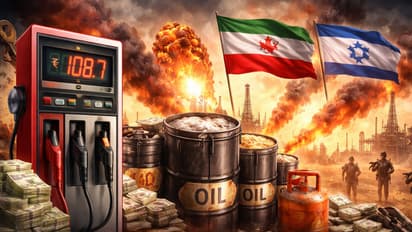
Oil prices surged and global stock markets fell after Donald Trump threatened further strikes on Iran, raising fears that the war will continue. Brent crude crossed $109, while major stock indexes dropped across the US, Europe, and Asia.

PREV
17
Oil jumps as tensions rise again

Oil prices rose sharply on Thursday after US President Donald Trump warned of more heavy strikes on Iran. His comments reduced hopes that the conflict in the Middle East would end soon.

The international oil benchmark, Brent crude, climbed more than eight percent to over $109 per barrel. At the same time, US oil prices also jumped strongly, with West Texas Intermediate rising above $113 per barrel.

Just before Trump’s speech, oil had dropped below $100. But his strong words quickly pushed prices higher again.

27
Stocks fall across global markets

Stock markets around the world fell after the speech. Investors were worried about the future of the conflict and its impact on the global economy.

In the United States, the three main stock indexes opened lower. The Dow Jones fell around 1.4 percent, the S&P 500 dropped about 1.3 percent, and the Nasdaq fell nearly 1.7 percent.

European markets also declined. Frankfurt’s DAX index fell more than two percent, while Paris dropped over one percent. London saw a smaller fall of about 0.3 percent, helped by gains in energy companies.

In Asia, markets had already closed lower earlier in the day. Tokyo’s Nikkei dropped over two percent, while Hong Kong and Shanghai also ended in the red.

37
Trump’s speech disappoints investors

Investors had hoped for signs of peace or a clear plan to end the conflict. However, Trump’s speech did not offer any timeline or solution.

He repeated that countries dependent on oil passing through the Strait of Hormuz should take action to reopen it themselves. He also said the waterway would reopen “naturally” once tensions ease, but gave no details.

Experts said these comments increased uncertainty. Market analysts noted that there was no clear sign of a quick end to the war.

47
Strait of Hormuz remains key concern

The Strait of Hormuz is one of the most important oil routes in the world. About one-fifth of global oil supply passes through it during normal times.

The ongoing conflict has disrupted shipping in the region. Iran has said the strait will remain closed to its “enemies”.

Britain hosted talks with around 40 countries to discuss how to reopen the waterway. However, no clear solution has emerged yet.

French President Emmanuel Macron said a military effort to reopen the strait would be unrealistic.

57
War continues to spread across region

The conflict, which began over a month ago after US and Israeli strikes on Iran, has spread across the Middle East.

Iran has responded with missile attacks, including strikes targeting Tel Aviv. Reports said several sites were hit, with a few people injured.

In Tehran, loud explosions were reported as strikes hit parts of the city. Key infrastructure, including steel plants, has been damaged.

Fighting has also spread to Lebanon, where Hezbollah launched drones and rockets at northern Israel.

67
No clear peace talks despite claims

Trump said the United States was close to achieving its goals and hinted at possible talks with Iran’s leadership.

However, Iran denied that any direct talks were taking place. Officials said messages had been exchanged through intermediaries but no negotiations were underway.

Iran also rejected US demands for a ceasefire, calling them unrealistic.

Safe-haven demand pushes dollar higher

The US dollar rose strongly against other currencies as investors looked for safer options.

The euro and pound both weakened against the dollar, while the Japanese yen also fell slightly.

77
Global economic concerns grow

The World Bank warned that the conflict could have serious effects on the global economy.

Managing Director Paschal Donohoe said there were strong concerns about rising inflation, job losses, and food security.

Higher oil prices can increase costs for transport, food, and energy, affecting millions of people worldwide.

Impact felt across countries

The crisis is already affecting daily life in many countries.

Airlines in China said they would increase fuel charges due to rising costs. In Malaysia, some government workers were asked to work from home to save fuel.

Even Bhutan, a small Himalayan country, is facing fuel shortages. Long queues were seen at petrol stations in the capital, Thimphu.

People there said they felt helpless as prices rose due to global events beyond their control.

People continue daily life amid war

Despite the conflict, people in affected regions are trying to continue their daily lives.

In Tehran, families gathered in parks to celebrate the Persian New Year tradition. In Israel, some people celebrated Passover in underground shelters due to safety concerns.

Experts say markets are likely to remain unstable as long as the conflict continues.

Without a clear path to peace, oil prices may stay high and stock markets may remain under pressure.

The situation remains uncertain, with global investors closely watching every new development.

(With AFP inputs)

Stay updated with all the latest Business News, including market trends, Share Market News, stock updates, taxation, IPOs, banking, finance, real estate, savings, and investments. Track daily Gold Price changes, updates on DA Hike, and the latest developments on the 8th Pay Commission. Get in-depth analysis, expert opinions, and real-time updates to make informed financial decisions. Download the Asianet News Official App from the Android Play Store and iPhone App Store to stay ahead in business.


Read more Photos on

Recommended Stories