India Aims to Build Robust Domestic Semiconductor Ecosystem Strategy
Synopsis
Industry leaders state that India can build a strong semiconductor ecosystem by focusing on internal talent, core engineering skills, and domestic innovation, supported by the India Semiconductor Mission to boost national economic growth.
Strategic Focus on Domestic Semiconductor Ecosystem
India holds the potential to establish a robust domestic semiconductor ecosystem by prioritising internal talent development, core engineering skilling, and domestic innovation, industry leaders noted during a select media roundtable ahead of its flagship ISIG Executive Summit India 2026.
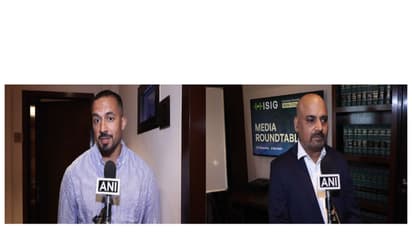
Speaking to ANI at the sidelines of the summit, Salah Nasri, Chief Executive Officer and Co-Founder of International Semiconductor Industry Group (ISIG), stated that global semiconductor companies prioritise workforce capabilities above all else when evaluating investment destinations. "The investment is going to come in primarily from our perspective, which is the talent. There is a shortage of talent in semiconductor manufacturing," Nasri told ANI. "India is home to some of the greatest education and talent in semiconductor manufacturing, especially from the design standpoint. And I think this is the priority that semiconductor companies are looking for. And then priority two is business development," he added.
Enhancing Self-Reliance and Economic Output
Underlining the necessity of self-reliance, Nasri noted that domestic capability directly strengthens national economic output. "You would rather be an innovator than a consumer. So if you can innovate and build internally, what's the point of going outside and buying outside? You just build your GDP, you build your ecosystem talent-wise, business-wise, internally rather than externally, which is a good thing for India as a country," Nasri said.
Nasri highlighted that following the foundation established by the India Semiconductor Mission (ISM) 1.0, the current phase must expand to critical supporting sectors, including equipment and materials manufacturers, alongside traditional packaging segments to secure the entire supply chain. ISIG, which spans more than seven countries, seeks to support this growth with a focused approach toward advanced packaging and power semiconductors.
Prioritizing Core Engineering Disciplines
Echoing the focus on specialised human capital, Santosh Kumar, President of ISIG India and Chief Executive Officer of Paras Semiconductors, stressed the urgent requirement to shift educational focus toward manufacturing disciplines. "Fields like chemical engineering and materials science engineering require serious focus, because semiconductor manufacturing heavily relies on them," Kumar told ANI. "The earlier IT software trend has given way to core engineering disciplines, and only when your foundation in core fields is strong can the domestic industry thrive," he observed.
Kumar detailed that the dual-layer support structure of the Indian government provides essential relief for capital expenditure. Subsidies from the central government under ISM 2.0, coupled with state-level assistance covering land, power, and water infrastructure, form a competitive framework globally for capital-heavy manufacturing. Under these initiatives, Paras Semiconductors plans to set up an advanced semiconductor manufacturing facility in Madhya Pradesh with an investment of Rs 6,200 crore.
The executive summit, being hosted in India for the first time after previous editions at major global semiconductor hubs, brought together international and domestic participants to establish technology and business linkages necessary for the emerging domestic industry. (ANI)
Stay updated with all the latest Business NewsShare Market NewsIPOsGold PriceDA Hike8th Pay CommissionAsianet News Official App