20 US States Sue Trump Administration over $100,000 H-1B Visa Fee
Synopsis
Twenty US states, led by California, have sued the Trump administration over a new $100,000 H-1B visa fee. They argue the move is unlawful and harms schools, hospitals and public services.
A group of 20 US states, led by California, has filed a lawsuit against the Trump administration over a new $100,000 fee on H-1B work visas. The states say the move is unlawful and could seriously harm public services such as healthcare, schools and universities by making it harder to hire skilled workers from abroad.
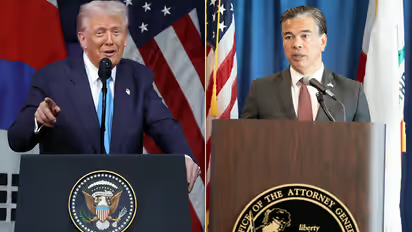
The lawsuit was announced by California Attorney General Rob Bonta. It challenges a policy introduced by the Department of Homeland Security (DHS) after a presidential proclamation issued in September.
Under the new rule, all new H-1B visa petitions filed after September 21 must pay an additional $100,000 fee. This is a major increase compared to current H-1B-related fees, which usually range from less than $1,000 to about $7,500.
The states argue that this new charge is unprecedented and far beyond what Congress has allowed. They say the administration does not have the legal power to impose such a large fee on its own.
States say law was bypassed
In their legal filing, the attorneys general say the policy violates the Administrative Procedure Act (APA). This law requires the government to follow a clear process before making major policy changes.
According to the lawsuit, the administration of Donald Trump failed to follow the required notice-and-comment process, which allows the public and affected groups to give feedback. The states also argue that visa fees must be linked to the actual cost of processing applications, which they say is not the case here.
They are asking the court to block the policy and declare it unlawful and unconstitutional.
The H-1B visa programme allows US employers to hire foreign workers in 'specialty occupations'. These are jobs that usually require at least a bachelor's degree or higher.
Common roles filled through H-1B visas include doctors, nurses, medical researchers, teachers, university lecturers, scientists and engineers.
Attorney General Rob Bonta said the new fee goes against the purpose of the programme. He said skilled workers from around the world help strengthen the US economy and public services, especially in states like California.
He warned that the fee would place “illegal financial burdens” on public employers and make labour shortages even worse.
Impact on schools, hospitals and public services
The lawsuit focuses strongly on the effect the fee could have on public sector and non-profit employers. Many schools, universities and hospitals rely on H-1B workers and are exempt from the annual visa cap of 65,000.
The states argue that these institutions cannot afford an extra $100,000 per hire. They say the cost could force them to cut services, reduce hiring or move money away from other essential programmes.
The problem is already serious in education. During the 2024-25 school year, nearly three-quarters of US school districts reported difficulty filling teaching positions. Shortages are especially severe in special education, science and bilingual teaching.
Teachers are one of the largest groups using H-1B visas, with tens of thousands working across the country.
Healthcare shortages raise alarm
Healthcare is another major concern raised in the lawsuit. In the 2024 fiscal year, nearly 17,000 H-1B visas were issued for medical and health-related jobs, including physicians and surgeons.
The US is expected to face a shortage of up to 86,000 doctors by 2036. This shortage is already being felt in rural and low-income areas, including parts of California.
The states argue that making it more expensive to hire foreign doctors will worsen patient care and increase pressure on already stretched hospitals.
The lawsuit comes as the Trump administration increases scrutiny of the H-1B visa system as part of a broader immigration crackdown.
Alongside higher fees, the administration has pushed for deeper vetting. A new proposal would require all visitors to the US to provide five years of social media history, including travellers from visa-waiver countries such as the UK, Japan and Australia. While not final, the proposal shows a wider shift towards tougher checks.
For H-1B applicants, social media vetting is already mandatory from December 15. Employers are also facing stricter compliance checks.
System pressure and Indian professionals
The impact is made worse by long-standing problems in the H-1B system. The annual cap remains fixed at 85,000 visas despite growing demand.
Indian nationals receive more than 70 per cent of H-1B approvals. Even after securing a visa, many face green card waits lasting decades because of country-based limits.
Lawmakers and critics say the new fee would hit Indian professionals the hardest and could harm US–India relations.
The Trump administration has defended the policy, saying it is meant to reform the H-1B system and protect American workers.
A White House spokesperson said the fee would discourage misuse of the programme and help protect domestic wages. The administration insists the move is legal.
Critics, however, warn that the policy could damage the US economy and push skilled workers towards countries with more open immigration systems.
As the legal battle begins, the future of the $100,000 H-1B visa fee remains uncertain. What is clear is that the case has brought renewed attention to how deeply skilled migrants are tied to US schools, hospitals and public services. The court's decision could shape the direction of America’s skilled immigration policy for years to come.