'Safety Risks': US Pulls Staff From Karachi, Lahore After Deadly Pro-Iran Protests Amid Tensions
Synopsis
US orders non-emergency staff to leave consulates in Karachi and Lahore after deadly pro-Iran protests erupt across Pakistan following the killing of Ali Khamenei in US-Israel strikes.
The United States on Wednesday ordered non-emergency personnel and their families to leave its consulates in Karachi and Lahore, citing rising security concerns in Pakistan amid escalating tensions linked to the killing of Iran’s supreme leader Ayatollah Ali Khamenei and the violent protests that followed across the country.
The move comes as anger over recent US-Israeli strikes against Iran has spilled onto the streets of several Pakistani cities, leaving at least 25 people dead over the weekend and prompting fears of further unrest.
Washington cites “safety risks” behind the decision
According to the US Department of State, the precautionary measure applies to non-essential government employees and family members posted at US consulates in Lahore and Karachi.
In a statement, the US Embassy in Pakistan said the decision was taken due to "safety risks".
Officials also clarified that there has been no change to the operational status of the embassy in the capital, Islamabad.
The State Department further said it has "authorized non-emergency US government employees and US government employee family members to leave" Saudi Arabia, Oman and Cyprus "due to safety risks".
Evacuation push as Americans leave the region
Amid the rapidly evolving conflict, US authorities say they are helping citizens who want to return home.
On Tuesday, the department said it was taking "historic action" to assist Americans wishing to leave the Middle East.
Officials added that in recent days more than "9,000 American citizens have safely returned from the Middle East, including over 300 from Israel."
Protests erupt across Pakistan after Khamenei’s killing
The security concerns in Pakistan come after widespread protests broke out following the death of Khamenei in strikes carried out by the United States and Israel.
According to an AFP tally, at least 25 people were killed during violent demonstrations over the weekend.
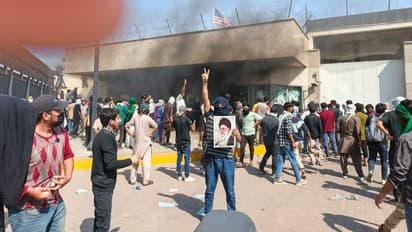
In Karachi, hundreds of protesters attempted to storm American diplomatic buildings, leading to clashes with police.
At least 10 people died and more than 70 were injured in those rallies, according to the office of the Karachi police surgeon. Hospital figures seen by AFP indicated that nine of the deaths were due to gunshot wounds.
Violence spreads to Gilgit-Baltistan
Clashes were also reported in the northern region of Gilgit-Baltistan, where officials said at least 13 people were killed.
A rescue official confirmed that seven people died in Gilgit, while a doctor told AFP that six others were killed in Skardu.
Authorities imposed a late-night curfew until Wednesday in both towns, and the army has been deployed on the streets to maintain order.
Tensions flare in the capital
In Islamabad, thousands of protesters gathered, many carrying portraits of Khamenei.
Two more people were killed during demonstrations in the capital.
On Sunday afternoon, AFP journalists saw police firing tear gas to disperse crowds near the diplomatic enclave housing the US embassy, as authorities tried to keep protesters away from the area.
Pakistan government reacts
Pakistan’s Prime Minister Shehbaz Sharif criticised the killing of Khamenei, calling it a breach of international norms.
"It is an age old convention that the Heads of State/Government should not be targeted," Sharif wrote on X.
He added that the "people of Pakistan join the people of Iran in their hour of grief and sorrow and extend the most sincere condolences on the martyrdom" of Khamenei.
(With inputs from AFP)