US Clears Saudi F-35 Deal Despite Security Warnings Over China Ties And Technology Exposure Risks
Synopsis
A major US defence decision is drawing scrutiny after officials advanced a high-value fighter jet sale despite concerns raised in intelligence assessments, sparking debate over security, regional balance and strategic priorities.
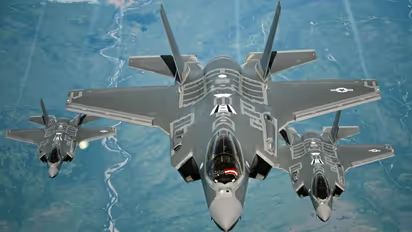
The United States has formally moved ahead with a multibillion-dollar sale of F-35 fighter jets to Saudi Arabia, advancing one of the most significant defence agreements in recent years despite concerns raised within parts of the American security establishment.
The State Department announced that it was proceeding with the sale of 48 F-35 Lightning II aircraft and a spare engine package valued at $24.3 billion. Officials said the proposed transaction would strengthen Saudi Arabia’s defensive capabilities and improve its ability to respond to current and future threats.
The notification has also been formally submitted to Congress, beginning the next stage of the approval process.
If completed, Saudi Arabia would become only the second country in the Middle East to operate the advanced stealth fighter after Israel. Because of the complexity of production and delivery, the aircraft would not arrive immediately, with the process expected to take years.
The decision comes despite intelligence concerns that have circulated within federal agencies and congressional committees regarding the possibility of sensitive military technology being exposed through Saudi Arabia’s expanding relationship with China.
According to reports, intelligence assessments examined whether facilities connected to advanced American fighter systems could remain fully protected from foreign access. Particular attention was directed toward China's presence in Saudi defence, telecommunications and infrastructure sectors.
One intelligence review reportedly questioned whether F-35-related facilities and technologies would remain adequately secured given existing military and technological ties between Saudi Arabia and Beijing.
Concerns were also raised over Chinese support for Saudi missile programs and broader defence cooperation between the two countries.
Despite those warnings, the Trump administration has continued supporting the proposed transaction, arguing that broader strategic considerations justify the sale.
Strategic Partnership Takes Priority
President Donald Trump first announced plans for the F-35 transfer last year ahead of a visit by Crown Prince Mohammed bin Salman to Washington.
Saudi Arabia has pursued access to the fighter jet for years as part of broader military modernization efforts. The F-35 is widely regarded as one of the most advanced combat aircraft in the world because of its stealth capabilities, sensor integration and advanced battlefield networking systems.
Before making the announcement, the State Department reportedly spent months consulting lawmakers and congressional committees responsible for oversight of major arms exports.
Administration officials maintain that all defence exports undergo reviews covering security, technology protection and broader geopolitical considerations.
The State Department said American military technology remains safeguarded through existing laws, export control mechanisms and defence policies.
However, critics have argued that concerns surrounding Chinese influence should have prompted additional caution.
Several lawmakers questioned the timing of the decision, arguing that intelligence warnings deserved greater consideration before allowing one of the United States' most sensitive military platforms to be transferred abroad.
The concerns mirror debates that emerged several years ago regarding a proposed F-35 sale to the United Arab Emirates. That process ultimately stalled after similar questions were raised about China’s role in the region and its access to advanced technologies.

Regional Balance And Security Debate Continue
The proposed sale is also generating discussion about military balance in the Middle East.
For decades, American policymakers have sought to preserve Israel’s qualitative military edge over neighboring countries. Israeli officials have periodically expressed concerns when advanced weapons systems are offered to regional partners.
While the United States has maintained strong defence relationships with both Israel and Saudi Arabia, balancing those partnerships has often required careful political and military calculations.
Saudi Arabia remains one of the largest purchasers of American defence equipment and has relied heavily on U.S.-made systems across multiple conflicts.
The aircraft deal is likely to face continued scrutiny even after formal notification to Congress. Lawmakers retain the option of introducing measures opposing the sale, although any successful effort would face significant procedural and political hurdles.
Questions also remain about whether future intelligence findings, regional security developments or geopolitical shifts could affect implementation before production begins.
For the Trump administration, however, the deal represents an important component of its broader strategic partnership with Riyadh.
Supporters view the transaction as a way to strengthen a key regional ally, deepen defence cooperation and reinforce American influence in the Middle East.
Critics, meanwhile, continue to argue that technology security concerns deserve closer attention, particularly given growing competition between Washington and Beijing.
The coming months are expected to bring further congressional debate as policymakers weigh military, diplomatic and security considerations surrounding one of the largest and most closely watched defence sales currently under consideration.