Ukraine hits over 40 Russian warplanes in biggest drone attack of war (WATCH)
Synopsis
Ukraine launched its largest drone attack yet, damaging over 40 Russian warplanes, including nuclear-capable bombers, and targeting strategic airbases. The strike follows Russia’s deadly missile barrage and ongoing stalled peace talks with Ukraine.
In one of the largest drone operations since the Russia-Ukraine war began, Ukraine struck deep inside Russian territory on Sunday, targeting strategic airbases and damaging more than 40 military aircraft. Ukrainian officials called it a landmark success, while Russia acknowledged the attack’s occurrence in Siberia.
Strike hits Siberian military unit, strategic bombers
According to Ukraine’s domestic intelligence agency, the Security Service of Ukraine (SBU), dozens of drones were used to hit Russian airbases. Aircraft damaged reportedly include nuclear-capable Tu-95 and Tu-22M3 bombers, as well as A-50 early warning planes. These aircraft have been key to Russia’s long-range missile campaigns on Ukrainian cities.
Igor Kobzev, governor of Russia’s Irkutsk region, confirmed that a military unit in Sredny (also spelled Sridni), a village in Siberia, was targeted in the attack. This marks the first Ukrainian drone strike recorded in Siberia, thousands of kilometers from the frontline.
Explosions at Olenya airbase, possible nuclear-linked target
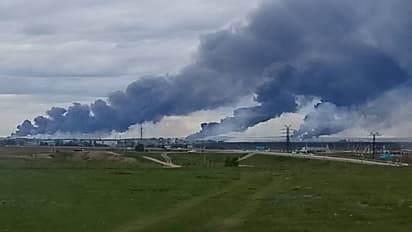
In another possible strike, Belarusian news agency NEXTA reported heavy explosions and rising smoke near the Olenya Air Base in Russia’s Murmansk region. The base is known to host aircraft capable of carrying nuclear weapons. NEXTA shared videos and photos on X, suggesting a drone attack, but no official confirmation has been given.
If verified, this could be one of the most sensitive hits on Russia’s military infrastructure since the invasion began in February 2022.
Damage estimated at over $2 billion
Yulia Mendel, former spokesperson to President Volodymyr Zelenskyy, stated on social media that the total damage from the drone attack could exceed $2 billion. She added that the operation targeted high-value military assets, making it one of the costliest single-day strikes Russia has suffered in the war.
There were no immediate reports of casualties from the Ukrainian side or confirmation from the Russian Defence Ministry regarding the scale of the aircraft losses.
Comes after Russia’s deadliest air raid on Ukraine
This attack came just a week after Russia launched its most extensive aerial bombardment of Ukraine. In a 24-hour assault, Russian forces fired 367 drones and missiles, killing 13 people, including three children, in Zhytomyr, and wounding dozens more across Kyiv, Kharkiv, Ternopil, Mykolaiv, and Khmelnytskyi.
While Ukraine's air defence systems intercepted 266 drones and 45 missiles, significant infrastructure and residential buildings were damaged.
Peace efforts continue but remain stalled
Amid the growing violence, the United States has urged Russia to accept a proposed 30-day ceasefire at the United Nations Security Council. The proposal, already accepted by Ukraine, includes halting all hostilities across land, air, sea, and infrastructure targets.
Ending the Ukraine conflict remains a key foreign policy goal of US President Donald Trump, who returned to office in January 2025. However, the latest round of peace talks in Istanbul ended without agreement.
Last week, Trump even called his Russian counterpart Vladimir Putin "crazy" after Moscow launched a deadly barrage of drones against Ukraine, even as the warring countries completed a large-scale prisoner exchange.
Russian Foreign Minister Sergei Lavrov claimed Moscow has drafted its own ceasefire terms but has not yet shared them with Ukraine.
A second round of peace negotiations is expected on Monday in Istanbul.
Russia-Ukraine conflict
The Russia-Ukraine war began in February 2022 with Russia's full-scale invasion. Since then, tens of thousands have been killed or injured, millions displaced, and both nations have suffered severe economic and military losses. The conflict has drawn international attention, with repeated but unsuccessful attempts to broker peace.
Ukraine’s latest drone strike demonstrates its continued ability to reach deep into Russian territory, highlighting the evolving nature of the war and adding new pressure on diplomatic efforts.