'Future Does Have Flying Cars': Tesla’s New Roadster Goes Upside Down, Takes Flight In Stunning Demo (WATCH)
Synopsis
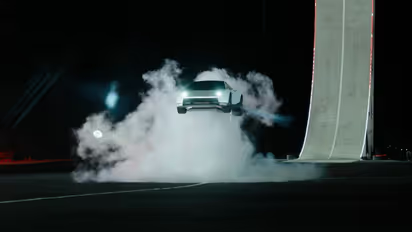
Tesla has brought the futuristic dream of flying cars into the spotlight after showcasing a redesigned Roadster that drove upside down on a specially engineered ramp, performed brief airborne manoeuvres and landed safely.
Tesla has brought the futuristic dream of flying cars into the spotlight after showcasing a redesigned Roadster that drove upside down on a specially engineered ramp, performed brief airborne manoeuvres and landed safely. The jaw-dropping demonstration took place at a SpaceX facility in McGregor, Texas, on October 15, nearly nine years after the next-generation electric sports car was first unveiled.
The spectacular stunt marked a significant moment for Tesla’s long-delayed electric supercar. The vehicle climbed a massive curved ramp, continued along it while upside down and then launched into the air before making a safe landing. The demonstration highlighted advanced technology developed in collaboration with SpaceX, Elon Musk’s rocket company.
Musk shared a video of the stunt on his social media platform, X, with the caption: "Turns out the future does have flying cars."
Turns out the future does have flying cars https://t.co/6fexPp6SXI
— Elon Musk (@elonmusk) October 16, 2026
Tesla's official account also shared footage of the demonstration, sparking fresh interest in the possibilities of next-generation vehicle technology.
Real life, baby https://t.co/3QEqn18wig
— Tesla (@Tesla) October 16, 2026
At the heart of the redesigned Roadster’s extraordinary capabilities are SpaceX-developed cold-gas thrusters, which generate thrust using pressurised gas. Combined with other specialised systems showcased during the event, the technology enables the vehicle to execute unconventional manoeuvres far beyond the capabilities of a traditional road car.
However, the impressive display does not mean flying cars are ready to hit public roads. The demonstration was conducted under controlled conditions, and there is no indication that the Roadster has received regulatory approval for airborne operation on public roads. Questions surrounding safety, legal clearances and the practical challenges of everyday use remain unanswered.
Tesla first unveiled its next-generation Roadster in November 2017, promising an electric sports car that would push the boundaries of performance. However, repeated production delays have kept eager customers waiting for years, turning the vehicle into one of the company's most anticipated projects.
According to reports following Thursday's unveiling, Tesla now plans to begin production in 2028. If the timeline holds, customers will have to wait even longer before the redesigned electric supercar becomes commercially available.