PTI Leader: Flawed Policies Push Pakistan Towards Isolation, Collapse
Synopsis
PTI's Abdul Samad Yaqoob criticizes Pakistan's military and foreign policies, warning of regional isolation and economic collapse. He highlights worsening ties with Afghanistan and a shift in insecurity from the eastern to the western border.
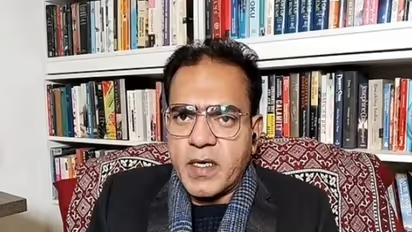
In a sharp critique of Pakistan's current military and foreign policies, Pakistan Tehreek-e-Insaf (PTI) leader Abdul Samad Yaqoob has warned that the country's worsening ties with Afghanistan and its flawed internal strategies are pushing Pakistan toward greater regional isolation and economic collapse. In an exclusive interview with ANI, Yaqoob stated the PTI founder's concerns, following Imran Khan's recent caution to Army Chief General Asim Munir, accusing the military establishment of pursuing "disastrous policies" that serve "personal or foreign interests" rather than Pakistan's national priorities.
Shift in Border Insecurity
Yaqoob highlighted the growing insecurity along the western border, a situation he said marks a drastic shift from Pakistan's traditional focus on the eastern frontier. "In the past, we faced tensions with India on our eastern border. But today, even our western border with Afghanistan has turned insecure, something that was never expected," he said, adding that Pakistan's confrontational stance has turned a once "brotherly" nation into a hostile neighbour.
The PTI leader criticised the government's decision to seal trade routes and restrict cross-border movement, calling it a self-inflicted wound that undermines both regional diplomacy and economic stability. "Instead of fostering trade and cooperation, they are seizing even the space for commerce. This is isolating Pakistan further in the international community," he stated.
Economic Crisis Deepens
On the economic front, Yaqoob dismissed government claims of revival, describing initiatives like the Special Investment Facilitation Council (SIFC) as "futile exercises". He noted that despite numerous Memorandums of Understanding (MoUs) and high-level visits, "no real investment has materialised."
According to him, Pakistan remains trapped in a "multifaceted crisis" that is deepening with every misstep in policy and governance. "Investors are being driven away instead of being attracted," Yaqoob said, warning that ongoing border tensions, trade disruptions at Torkham, and the lack of political stability could push the economy into an irreversible decline. (ANI)