Pakistan's US-Iran Peace Bid Falters Despite High-Level Iran Talks
Synopsis
PM Shehbaz Sharif met the Iranian FM as US-Iran talks in Islamabad neared collapse. Despite a city-wide lockdown, Tehran refused to meet the US team, demanding the US Navy lift its Hormuz blockade, highlighting Pakistan's diplomatic impotence.
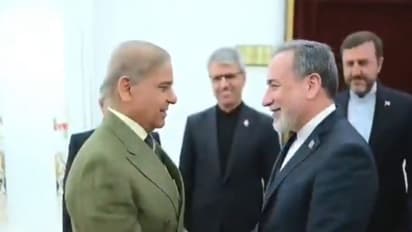
In a frantic attempt to project regional relevance, Pakistan Prime Minister Shehbaz Sharif held a high-level meeting with Iranian Foreign Minister Abbas Araghchi on Saturday, even as the highly anticipated second round of US-Iran peace talks in the capital teeter on the brink of total collapse.
According to a statement released by the Office of Pakistan's Prime Minister on X, Araghchi arrived at the Prime Minister's House for discussions focused on the "situation in the region". Significantly, the civilian leadership was closely flanked by the military establishment, with Pakistan Army Chief Marshal Asim Munir and Deputy Prime Minister Ishaq Dar also participating in the talks.
Earlier in the day, Araghchi held a separate meeting with Munir, underscoring the military's dominant hand in Pakistan's foreign affairs amidst a deepening diplomatic deadlock with Washington.
Capital on Lockdown Amid Diplomatic Deadlock
While the Pakistani leadership rolls out the red carpet, the reality on the ground exposes a nation struggling to manage its ambitious mediation efforts. In a bid to secure the visiting dignitaries, the host nation has placed its own capital under a "suffocating security lockdown." Authorities have sealed off major roads and placed the high-security Red Zone under a strict cordon.
Yet, despite severely disrupting the daily lives of its citizens, Pakistan has failed to secure the one thing the lockdown was meant for, an actual meeting between the primary stakeholders, the US and Iran.
Tehran Sidelines Islamabad, Issues Direct Demands
Despite the heavy-handed security measures, prospects of high-stakes peace talks between the United States and Iran in Islamabad are "rapidly fading", exposing the host nation's diplomatic impotence as Tehran refuses to meet the travelling American delegation, as per Kamran Khan, chairman of Pakistan-based news outlet ARY News.
Despite going to extreme lengths to orchestrate high-profile diplomatic arrangements, the Pakistani establishment has been entirely sidelined by the actual stakeholders, reducing Islamabad to a mere spectator in its own capital.
According to Khan, citing informed sources, Tehran is "still not ready to meet the U.S. delegation", which includes US Special Envoy Steve Witkoff and Senior Adviser and son-in-law of US President Donald Trump, Jared Kushner. Iran has effectively bypassed its Pakistani hosts, issuing demands directly to Washington. Tehran's precondition - that the US Navy must first lift its blockade on the Strait of Hormuz and Iranian ports.
"Prospects for the resumption of the second round of U.S.-Iran talks in Islamabad today are rapidly fading, as Tehran is still not ready to meet the U.S. delegation," Khan stated in a post on X.
Echoes of Past Failures
This weekend's diplomatic theatre is rapidly mirroring the failures of the past. The first round of talks hosted in Islamabad--featuring US Vice President JD Vance and Iranian Parliamentary Speaker MB Ghalibaf--dragged on for a gruelling 21 hours without yielding a single breakthrough.
As Pakistan's leaders continue to pose themselves as a mediating force with the Iranian delegation, the overarching narrative is one of diplomatic impotence. Islamabad has successfully shut down its own capital, but it appears completely incapable of bringing the United States and Iran to the negotiating table. (ANI)
(Except for the headline, this story has not been edited by Asianet Newsable English staff and is published from a syndicated feed.)