Nepal Provokes India Again? Disputed Map on New NPR 100 Note Could Fuel Territorial Fire
Synopsis
Nepal issues new NPR 100 notes featuring a revised map including Kalapani, Lipulekh and Limpiyadhura, escalating its border dispute with India despite New Delhi calling the move a “unilateral act.”
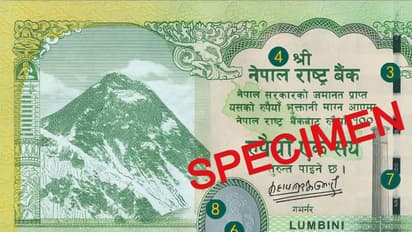
Nepal’s central bank has quietly placed itself at the heart of a long-standing diplomatic flashpoint. On Thursday, it issued new 100-rupee currency notes that feature a revised national map — one that includes Kalapani, Lipulekh and Limpiyadhura, territories India insists are part of its sovereign land.
The redesigned banknote, according to officials of the Nepal Rastra Bank (NRB), bears the signature of its former Governor Maha Prasad Adhikari and is dated 2081 BS, reflecting the year 2024 in the Nepali calendar.
A Map That Became a Movement
The roots of the controversy stretch back to May 2020, when the then K P Sharma Oli-led Nepal government released a politically charged map. It showed Lipulekh, Kalapani and Limpiyadhura as Nepal’s territory — a stance that was swiftly backed by the country’s Parliament.
India’s response was sharp and unequivocal. It publicly rejected the map, calling it a “unilateral act” and cautioning Kathmandu that such “artificial enlargement” of territorial claims would not be acceptable.
Despite diplomatic pushback, Nepal has not retreated from its stand. Instead, it has turned the map into a symbol — now being carried in wallets and pockets across the country.
NRB: ‘The Map Was Already There’
Responding to questions over the new design, an NRB spokesperson clarified that this wasn’t an entirely fresh insertion of disputed geography:
“The map was already in the old Rs 100 bank note, and it has been revised as per the government's decision.”
The spokesperson further explained that among Nepal’s various denominations — NPR 10, NPR 50, NPR 500 and NPR 1,000 — only the NPR 100 note carries the national map.
Designing National Identity Into Paper
Beyond geopolitics, the new banknote carries familiar cultural and national symbols. Mt. Everest towers prominently on the left, while a watermark of the Rhododendron — Nepal’s national flower — appears on the right side of the note.
In the background lies a faint green map of the country, while the Ashoka Pillar stands neatly beside it, with a message meant to reinforce a shared heritage:
“Lumbini, the birthplace of Lord Buddha.”
On the reverse, the majestic horned rhino — an icon of Nepal’s rich biodiversity — makes an appearance. Safety features like a security thread and an embossed black dot have been added to help visually impaired individuals identify the currency.
Geography Meets Geopolitics
Nepal shares a border of more than 1,850 km with India, cutting across five states — Sikkim, West Bengal, Bihar, Uttar Pradesh and Uttarakhand. While people travel freely for trade, studies and family ties, the geopolitical boundary remains sensitive.
The Kalapani-Lipulekh-Limpiyadhura region has long been a friction point. India claims the tri-junction area is part of Uttarakhand’s Pithoragarh district, citing historical records and administrative control. Nepal maintains its own historical interpretations.