Sushila Karki Emerges as Gen Z's Top Choice to Lead Nepal amid Unrest
Synopsis
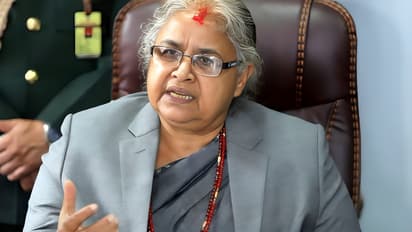
Sushila Karki, Nepal’s first female Chief Justice, has emerged as Gen Z’s leading choice to head the country’s interim government amid violent protests. She has gathered strong public support amid political instability and curfew measures.
As Nepal grapples with severe political unrest, former Chief Justice Sushila Karki has emerged as the leading candidate to head the country’s interim government. Over 5,000 young people participated in a virtual meeting organized by Gen Z activists to decide the future leadership of Nepal after mass protests led to the resignation of Prime Minister KP Sharma Oli.
Anti-corruption protests in Nepal
The protests, which began on September 8, were triggered by the government's controversial social media ban. Young Nepalese citizens, primarily students and youth leaders, came together demanding greater government accountability, transparency and an end to corruption. What started as peaceful demonstrations quickly spiraled into violent clashes. Protesters torched public buildings, including the Parliament House, President’s Office, Prime Minister’s residence and party headquarters. Amid the violence, at least 19 people lost their lives and hundreds were injured.
Initially, Kathmandu Mayor Balen Shah was viewed as the favorite candidate to lead the transitional government. However, multiple attempts to contact Shah went unanswered, prompting the participants to shift focus.
A Gen Z representative reportedly told local media, "Since Balen Shah did not take our calls, the discussion shifted to other names. The most support has gone to Sushila Karki."
Sushila Karki seeks proof of public support
Sushila Karki, aged 72, is a respected figure in Nepal's legal and political history. She became Nepal's first female Chief Justice in 2016, after a distinguished career as a lawyer and judge. Known for her integrity, fearlessness and dedication to justice, Karki's image resonates strongly with young activists demanding a clean break from corrupt politics.
To consider her candidacy, Karki requested at least 1,000 written signatures as proof of public support. According to sources quoted by India Today, she has now received over 2,500 signatures, doubling the requirement. This significant backing reflects the faith of the youth in her leadership abilities.
Other notable names discussed at the virtual meeting included Kulman Ghising, the chief of Nepal Electricity Authority, youth leader Sagar Dhakal, and Dharan Mayor Harka Sampang. A popular YouTuber, Random Nepali, also garnered support but stated he would only step in if no other leader accepted the role.
If Sushila Karki agrees to lead, experts in Nepal believe she would first meet Army Chief General Ashok Raj Sigdel, followed by seeking formal approval from President Ram Chandra Poudel. This procedure is seen as critical to ensuring the political legitimacy of any new government.
Sushila Karki's career
In her career, Sushila Karki broke multiple barriers. Born in Biratnagar on June 7, 1952, she began as a schoolteacher before shifting to law. She became a Senior Advocate in 2007 and joined the Supreme Court as an ad-hoc judge in 2009. She was later confirmed as a permanent judge and eventually became Acting Chief Justice before serving as Chief Justice from July 2016 to June 2017. Her appointment by President Bidya Devi Bhandari came at a time when Nepal was experiencing political instability, and her integrity earned her widespread respect.
If confirmed, Sushila Karki's leadership would mark a historic shift in Nepalese politics, a break from the traditional party system towards a more independent, youth-backed interim government aimed at healing the nation.
The protests, arrests and curfew in Nepal
The Nepal Army has imposed strict prohibitory orders and a nationwide curfew in response to the violence. According to a statement from the Directorate of Public Relations and Information, the nationwide curfew will come into force from 6:00 am on Thursday, Bhadra 26 (September 11), following days of heightened unrest. Army officials confirmed that 27 people were arrested for participating in looting, arson, and violent acts.
The Army recovered stolen cash worth NRs 3.37 million and confiscated 31 firearms along with ammunition from suspects. Authorities also deployed fire trucks to extinguish flames set by protestors in various locations, including the Gausala-Chabahil-Bouddha corridor of Kathmandu.
At least 23 Nepal Police officers and three civilians injured in the protests are currently receiving medical treatment at military hospitals.
The protests reflect a larger dissatisfaction among the youth over Nepal’s economic struggles. Nearly 5,000 young Nepalis leave the country daily for jobs abroad, unable to find meaningful work at home. The trending 'Nepo Babies' campaign on social media exposed the extravagant lifestyles of politicians’ children, igniting public anger against nepotism, corruption, and inequality.
Foreign Minister Dr. Arzu Rana Deuba, wife of former Prime Minister Sher Bahadur Deuba, was also attacked during the protests when demonstrators stormed her residence in Kathmandu. This highlighted the chaotic and dangerous situation across the capital.
Meanwhile, political parties and stakeholders remain in urgent discussions to find consensus and stabilize the nation. KP Sharma Oli, in his resignation statement, said he would lead all-party talks to bring a 'meaningful conclusion' to the crisis, though his departure underlines the fragile political situation.
In this difficult and uncertain period, the eyes of the world remain on Nepal as its citizens demand a government that serves the people and restores peace and stability. The hope of the Gen Z activists now rests on Sushila Karki, who stands as a symbol of integrity, competence, and an unyielding commitment to justice.
The coming days will be crucial in determining whether Sushila Karki accepts the proposal and successfully navigates the political and constitutional hurdles ahead. Her acceptance would reflect not only the aspirations of the youth but also Nepal's desire for transparent and accountable governance during this period of transition.
(With inputs from agencies)