London's Iconic 100-Year-Old Indian Restaurant Veeraswamy Faces Uncertain Future: Here's Why
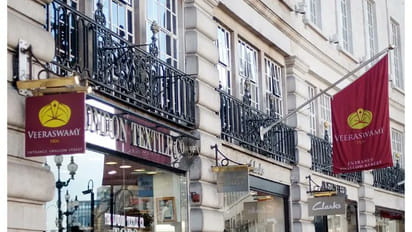
Synopsis
London's iconic Veeraswamy restaurant, the UK's oldest surviving Indian restaurant, faces an uncertain future amid a lease dispute with the Crown Estate over plans to renovate its Regent Street building after nearly 100 years.
For nearly a century, Veeraswamy has been a landmark of Indian cuisine in London, introducing generations of diners to India's flavours and culinary traditions. Established in 1926, the restaurant is recognised as the UK's oldest surviving Indian restaurant and has welcomed royalty, celebrities, business leaders and other prominent personalities over the decades. However, the iconic establishment is now facing an uncertain future as a lease dispute threatens its long-standing presence on Regent Street in Mayfair.
The restaurant's struggle is reportedly not linked to financial difficulties but to plans to renovate the building in which it operates. The Crown Estate, which owns the property, has reportedly indicated that the restaurant will not be able to continue operating from the premises and that its lease will not be renewed. As employees and supporters seek to protect the historic establishment, attention has turned to its remarkable journey and the legacy it has built in London's culinary scene.
How Did London's Oldest Indian Restaurant Begin?
The story of Veeraswamy dates back to 1926, when Edward Palmer established the restaurant in London. Palmer belonged to the influential Palmer family, which had connections with India's banking circles, the East India Company and Mughal royalty. His grandfather had served as a banker to the Nizam of Hyderabad, who was among the wealthiest rulers in the world at the time.
Although Palmer moved from India to London in 1880, he maintained a strong interest in Indian food, spices and culinary traditions. Under the name E.P. Veerasawmy, he began selling Indian spices and condiments, conducting cooking demonstrations and sharing recipes with British audiences.
His involvement in the food industry gradually expanded, eventually leading him to operate a temporary Indian restaurant at the British Empire Exhibition in 1924 and 1925. The venture received an encouraging response and strengthened his ambition to introduce Indian cuisine to a wider British audience.
Palmer also promoted Indian pulses and vegetable-based dishes, highlighting their nutritional value at a time when such food choices had not yet become mainstream in Britain.
Veeraswamy Opened Its Doors In 1926
Building on his experience in food retail, cooking and hospitality, Palmer decided to establish a permanent restaurant that would showcase Indian cuisine while reflecting the elegance and grandeur associated with India's royal households.
His vision became a reality on March 16, 1926, when Veerasawmy's India Restaurant opened in London. The establishment gradually developed a reputation as a meeting place for people interested in Indian food and culture.
The restaurant attracted Indian Maharajas, affluent travellers, business personalities and members of London's high society. Over time, it became an important destination for those seeking to experience Indian hospitality and cuisine in the British capital.
A Favourite Among Celebrities And Prominent Personalities
Over the decades, Veeraswamy established itself as a prominent name in London's restaurant scene. Its distinguished guest list has included former British Prime Minister Winston Churchill, Hollywood actor Charlie Chaplin and actor Marlon Brando.
The restaurant's culinary reputation also extended beyond its dining rooms. Its Michelin-starred kitchen has reportedly catered events at Buckingham Palace, further strengthening its standing as one of London's most recognised Indian dining establishments.
From its early days of introducing Indian food to British diners to its present position as a celebrated restaurant, Veeraswamy has remained closely associated with India's culinary heritage in the UK.
Why Is Veeraswamy Facing The Threat Of Closure?
Despite its long history and reputation, Veeraswamy is now facing the possibility of losing its historic premises on Regent Street in Mayfair. The uncertainty follows plans to renovate Victory House, the building in which the restaurant operates.
The Crown Estate, the property's landlord, has reportedly informed the restaurant that it will not be able to continue operating from the premises and that its lease will not be renewed. The development has raised concerns among the restaurant's employees, management and supporters, who fear that the historic establishment could lose the address it has occupied for decades.
The dispute has attracted attention because the restaurant's future is reportedly being threatened by the proposed redevelopment and lease decision rather than financial difficulties.
Employees And Supporters Appeal To King Charles
As concerns over the restaurant's future grow, its employees and supporters have reportedly appealed to King Charles for assistance. They hope the monarch will intervene to help protect the establishment and preserve its historic presence in London.
Ranjit Mathrani, chairman of MW Eat, the company that owns Veeraswamy, has also questioned the decision not to renew the restaurant's lease. Expressing his concerns, he reportedly asked whether a similar decision would have been taken against a prominent celebrity chef's restaurant.
According to a report by Metro, Mathrani said, "Would they have done that to Gordon Ramsay? No."
A Historic Chapter Of Indian Cuisine In London At Risk
As the lease dispute continues, Veeraswamy's future remains uncertain. For almost 100 years, the restaurant has served as a cultural and culinary link between India and the UK, introducing diners to Indian flavours while becoming an integral part of London's dining history.
Its possible departure from Regent Street would mark a significant moment for the city's Indian restaurant scene. Employees, supporters and heritage advocates are hoping that an agreement can be reached to preserve the establishment at its historic location.
Whether Veeraswamy will continue welcoming diners at the same address remains to be seen. However, its contribution to popularising Indian cuisine in Britain has already secured it a distinctive place in the country's culinary history.