Kashmir Solidarity Day a 'fraudulent exercise', says PoJK activist
Synopsis
PoJK activist Amjad Ayub Mirza slammed Pakistan's Kashmir Solidarity Day as a 'fraudulent exercise' designed to hide human rights abuses in PoJK and PoGB and divert attention from the exodus of Kashmiri Pandits in 1990.
Every year on February 5, Pakistan observes what it calls Kashmir Solidarity Day. Officially, it claims to stand for the rights of Kashmiris, but in reality, the day is about state-sponsored propaganda, designed to distract from Pakistan's own human rights record both in Pakistan-occupied Jammu and Kashmir and across regions under its control.
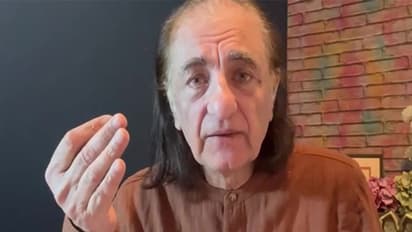
Political activist from Pakistan-occupied Jammu and Kashmir (PoJK), Amjad Ayub Mirza, has sharply criticised Pakistan's observance of Kashmir Solidarity Day on February 5, calling it a "fraudulent exercise" aimed at concealing alleged human rights abuses, poor governance, and exploitation of resources in PoJK and Pakistan-occupied Gilgit-Baltistan (PoGB).
Historical Context and Allegations
In a video statement, Mirza said the origins of Kashmir Solidarity Day must be viewed in historical context. He noted that the day was initiated in 1990 by Jamaat-e-Islami leader Qazi Hussain Ahmed and approved by then Pakistani Prime Minister Nawaz Sharif, shortly after the mass exodus of Kashmiri Pandits from the Kashmir Valley.
According to Mirza, the timing of the announcement, just weeks after January 19-20, 1990, when Kashmiri Pandits were forced to flee amid violence, raises serious questions. He alleged that the objective was to divert attention from what he described as the genocide and ethnic cleansing of Kashmiri Pandits, and to promote the idea of Kashmir as an exclusively Muslim region.
Mirza argued that Pakistan uses Kashmir Solidarity Day to mask its own record in territories under its control. He questioned Pakistan's claims of concern for Kashmiris, asking why similar attention is not paid to human rights conditions in PoJK and PoGB.
Development Disparity and Resource Exploitation
Contrasting development trajectories, Mirza claimed that India has invested heavily in Jammu and Kashmir, citing improved airports, universities, railway connectivity, and major infrastructure projects such as the Chenab rail bridge. In comparison, he alleged that PoJK continues to suffer from lack of educational institutions, healthcare facilities, employment opportunities, industrial growth, and agricultural development.
"India has upgraded airports, universities, railway networks and is even building the world's tallest bridge in the Chenab Valley. What does Pakistan have to show in PoJK?" he said.
Systematic Plundering of Resources
He further accused Pakistan of systematic plundering of PoJK's natural resources, alleging that forest cover has declined from over 40 per cent to less than 14 per cent over the decades. Mirza also linked deforestation to the scale of destruction caused during the 2005 earthquake, arguing that environmental degradation worsened landslides and casualties.
Mirza claimed that medicinal herbs worth billions of rupees are extracted annually from PoJK without compensation, along with large-scale smuggling of timber into Pakistan.
Suppression of Dissent and International Hypocrisy
He said these practices have fuelled widespread public anger, culminating in mass protests led by the Joint Awami Action Committee.
Referring to the handling of protests, Mirza alleged that peaceful demonstrators were fired upon and that security forces, including Punjab Police, Rangers, and elite units, were deployed to suppress public rallies in Muzaffarabad.
"Peaceful protesters were met with bullets. Punjab Police, Rangers and even SSG commandos were deployed to crush public rallies in Muzaffarabad," he alleged.
He also accused Pakistan of hypocrisy on international platforms, including the United Nations, alleging that while Islamabad raises concerns about human rights in Jammu and Kashmir, residents of PoJK and PoGB face restrictions such as movement curbs, confiscation of identity documents, and enforced confinement in villages.
Challenging the Official Narrative
Calling February 5 a "symbolic cover-up", Mirza said the day is used to project the Pakistani military as the guardian of the Kashmir cause, a narrative he described as misleading.
He reiterated that the entire princely state of Jammu and Kashmir acceded to India on October 26, 1947, following the signing of the Instrument of Accession by Maharaja Hari Singh.
According to Mirza, an increasing number of people in PoJK no longer observe Kashmir Solidarity Day. Instead, he said, they believe that PoJK itself needs international solidarity, adding that regions under Indian administration are comparatively more developed than PoJK and PoGB.
(Except for the headline, this story has not been edited by Asianet Newsable English staff and is published from a syndicated feed.)