Jackals Spotted Roaming Northern Tel Aviv Streets as Israel Raises Alert Over Rising Rabies Cases
Synopsis
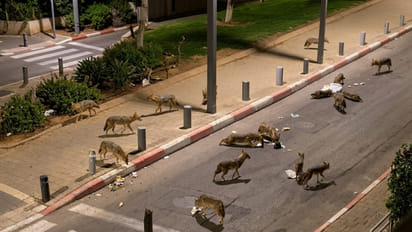
Groups of jackals have been spotted roaming residential neighbourhoods in Tel Aviv, Israel, prompting concerns among residents and renewed attention to rabies risks. People in said the animals approach pedestrians and search for food near homes.
Residents of northern Tel Aviv, Israel, have raised concerns after groups of jackals were spotted roaming residential streets, parks and areas near homes. The animals have reportedly become increasingly bold, approaching pedestrians and searching for food, leaving some residents afraid to venture outside after dark. The sightings have also drawn attention to Israel's wider concerns over the spread of rabies among wild animals.
TEL AVIV IN CHAOS: HYENAS AND JACKALS INVADED THE STREETS
Israelis are hiding inside their homes as panic grips the city after people have been bitten and infected with rabies. https://t.co/9fBW0H1TZd
— Rabbi Jeff (@RabbiJeffx) November 23, 2026
Footage showing several jackals moving through a residential street circulated on social media. Reports said the animals had been spotted in neighbourhoods including Tzahala and Neve Sharett.
JACKALS invade Tel Aviv residential area
Israel on alert for possible RABIES spread https://t.co/UipbiFdtF5
— RT (@RT_com) November 23, 2026
Residents Fear Jackal Encounters After Dark
Residents told Israeli media outlet Walla that the animals regularly gather near homes and public spaces, particularly in the evening.
Shiraz Edri, who lives opposite Tzahala Park, said jackals often appeared near her home from around 6 pm. She said they sometimes followed people instead of moving away, making evening walks uncomfortable, especially for families with children.
In Neve Sharett, resident Adva Bar David described an encounter in which two jackals approached her and friends while they were sitting in a garden. One of the animals reportedly took food from the group before running away.
Residents have called on the Tel Aviv Municipality to take action to address the growing presence of the animals.
Why Are Jackals Entering Residential Areas?
Food waste is believed to be one of the reasons wild animals are moving closer to populated areas. Israeli ecologist Amit Dolev told The Times of Israel that open rubbish bins, leftover food and food placed outside for stray cats can attract jackals into neighbourhoods.
Tel Aviv-Yafo Deputy Mayor Tzipi Brand said the municipality was working with its veterinary team on measures including sterilisation, vaccination and marking of the animals. She also urged residents to keep rubbish bins closed, clear away food scraps and feed stray cats only at designated locations.
Is There A Risk Of Rabies In Tel Aviv?
The concern comes amid a wider rise in rabies cases across Israel. In July 2026, Israel's Health Ministry said cases had increased by 252% between 2022 and 2025. It reported that 69 animals had already tested positive in 2026 at the time and warned that wild animals, including jackals, were increasingly entering urban areas.
The ministry identified poor sanitation, food left outdoors, animal movement and the displacement of wildlife as factors contributing to the spread. Israel's Agriculture Ministry maintains a public record of confirmed rabies cases, including infections among jackals in different parts of the country.
However, there is no confirmation that the jackals recently seen in Tel Aviv were infected with rabies. Their presence in residential areas should not, by itself, be treated as proof of an outbreak.
Rabies is a potentially fatal disease that can spread through bites or contact with the saliva of an infected animal. The Health Ministry advises anyone bitten or scratched to wash the affected area thoroughly with soap and water for about 10 minutes and seek urgent medical assessment to determine whether preventive treatment is needed.