Ishaq Dar's Brussels visit a 'defining moment' for Pakistan's GSP+
Synopsis
Exiled journalist Taha Siddiqui warns that Ishaq Dar's Brussels visit is a critical test for the EU. He argues that Pakistan's systematic human rights violations, including in Balochistan, and its democratic collapse, should risk its GSP+ status.
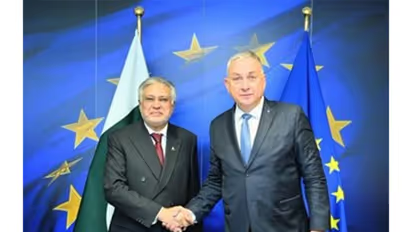
Exiled Pakistani journalist and human rights defender Taha Siddiqui has said that Deputy Prime Minister and Foreign Minister Ishaq Dar's visit to Brussels from November 19 to 21, 2025, comes at a defining moment for Pakistan's trade privileges and for Europe's moral credibility.
In his article for South Asia Press, Siddiqui writes that Dar's visit coincides with the European Commission's preparations for the 2026 review of Pakistan's compliance with the 27 international conventions required under the lucrative GSP+ (Generalised Scheme of Preferences Plus) scheme, which grants Pakistan "EUR3-4 billion in additional export access each year."
Mounting Evidence of Human Rights Collapse
According to Siddiqui, a growing body of evidence, including EU monitoring reports, European Parliament resolutions, and assessments from Amnesty International, Human Rights Watch, and UN mechanisms, paints a stark picture of Pakistan's human rights collapse. He argues that enforced disappearances in Balochistan, extrajudicial killings in the former tribal districts, political repression, and the continued presence of terrorist financing networks reflect "systematic violations" that the EU can no longer ignore.
'Epicentre of State Cruelty': Balochistan
Siddiqui highlights Balochistan as the "epicentre of state cruelty," pointing to thousands of missing persons and the continued detention of activist Mahrang Baloch on what he describes as trumped-up charges. The recurring discovery of mutilated bodies, consistent with the long-documented "kill-and-dump" pattern, shows, he says, that abuses remain unchecked.
Democratic Collapse and Political Repression
He also points to what he calls Pakistan's democratic collapse. The imprisonment of former Prime Minister Imran Khan, mass arrests of PTI members, and widespread rigging during the 2024 elections, "documented even by the EU's observation mission," illustrate, Siddiqui says, the military establishment's "total control over politics."
Persecution in Former FATA Districts
In the merged former FATA districts, Siddiqui cites ongoing military operations, civilian casualties, and the persecution of figures such as Ali Wazir. He adds that PTM leaders, including Manzoor Pashteen, continue to face sedition charges "merely for demanding accountability and constitutional rights."
Failure to Curb Extremist Financing
Siddiqui further argues that Pakistan has failed to dismantle extremist financing and cross-border militancy, with UN-designated terrorists such as Masood Azhar and Hafiz Saeed still "beyond real prosecution."
'Decisive Test' for the European Union
Given that the GSP+ framework mandates action when abuses are "serious and systematic," Siddiqui says the EU now faces a decisive test. According to him, issuing only "polite statements" at this point would amount to "endorsing disappearances, political imprisonment, and militant impunity in Pakistan." (ANI)