Iran's rise as a geopolitical, energy power hailed after BRICS entry
Synopsis
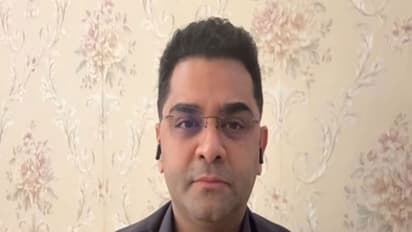
Isfahan University's Mohsen Farkhani asserts Iran is now a major geopolitical and energy power, citing its BRICS membership, control over the Strait of Hormuz, and successful resistance to US unilateralism and sanctions, which has reshaped alliances.
Iran's Ascendance as a Geopolitical Power
In an interview with ANI, Farkhani said, "Iran, after imposing deep asymmetric defeats on the United States and asserting its sovereignty over the Strait of Hormuz, and also as a full member of BRICS, cannot be seen as just an ordinary member. Iran is now an influential geopolitical and energy player, which is simultaneously a symbol of resistance against the unilateralism of the United States. It has also dealt a blow to the perception of US global hegemony."
He further noted that the country's strategic leverage in vital maritime passages has reshaped international alliances. "The second factor is Iran’s control over the Strait of Hormuz, which has been seen by the United States as a gateway to China. In this regard, these strategic advantages have turned Iran into a special partner for Russia and China, and simultaneously for the Shanghai Cooperation Organisation and BRICS, which can help counter US geopolitical manoeuvring within the region. Therefore, I believe Iran has brought about these changes, which could also result in some of the solutions that have been recommended by Iran, such as independent financial corridors based on national currencies. Such actions could also make other BRICS member countries more secure against future US countermeasures," he added.
Diplomatic Engagements Signal Failure of Sanctions
Commenting on high-level diplomatic engagements, particularly regarding Iranian President Masoud Pezeshkian's interaction with Abu Dhabi Crown Prince Khaled bin Mohamed bin Zayed Al Nahyan after meeting him on the sidelines of the BRICS Summit in New Delhi, the academic emphasised the failure of punitive international measures to sideline Tehran.
Addressing this diplomatic outreach, Farkhani stated, "Such attendance and participation in this summit is a very significant sign and signal to the world, especially after the economic sanctions imposed by the United States, which it has done numerous times. It is a very strong signal that Iran cannot be isolated or sanctioned, and that the United States is not able to push Iran towards its demands or dictate its terms anymore."
When questioned on whether high-level bilateral meetings could catalyse broader diplomatic frameworks across South Asia and the Middle East, he affirmed the potential for fresh multilateral understandings. Responding to queries regarding whether the Iran-UAE meeting in Delhi can be the beginning of a new regional dialogue, he noted, "For sure, it can be. As we have witnessed, there have been new agreements and cooperation in the region, such as the Mecca Pact. I believe this could be another step towards putting aside the United States from significant geopolitical developments, especially in the region. I believe that Iran’s participation in such summits will make BRICS and the Shanghai Cooperation Organisation more powerful. Iran is no longer the same member it was previously. Iran’s position in the world has now changed."
India-Iran Bilateral Relations Strengthened
Reflecting these diplomatic developments on the ground, the Iranian Embassy in India announced on Sunday that the Iranian President has flown back to Tehran. “President Masoud Pezeshkian, who travelled to India to attend the BRICS Summit, has just departed New Delhi for Tehran,” the Embassy stated on X, sharing a glimpse of Pezeshkian’s departure.
Before leaving, Pezeshkian expressed that he is looking forward to seeing Prime Minister Narendra Modi in Iran very soon. “Goodbye, my dear friend. I look forward to seeing you in Iran very soon,” the Iranian Embassy stated on X, sharing a picture of Pezeshkian and PM Modi.
PM Modi stated on Friday that India and Iran should move forward with a long-term and win-win strategy. PM Modi made the comment following his meeting with the Iranian President on the sidelines of the summit, noting that the visit is 'more special' as it is his first to India. “From Bishkek to Delhi, the productive discussions continue. Happy to have met Dr Masoud Pezeshkian, the President of Iran. This visit is more special because it is his first visit to India,” PM Modi stated on X.
“We talked about the India-Iran friendship. We believe that we should move forward with a long-term and win-win strategy. The prevailing situation in the region was also discussed. India remains steadfast in its commitment to the pursuit of enduring peace,” he added.
18th BRICS Summit Concludes in New Delhi
India successfully wrapped up its tenure as host of the 18th BRICS Summit in New Delhi on September 12–13. Steering the bloc under the core vision "Building for Resilience, Innovation, Cooperation and Sustainability," New Delhi navigated complex geopolitical fractures and competing priorities among member states to successfully secure the unanimous adoption of the New Delhi Declaration. (ANI)
(Except for the headline, this story has not been edited by Asianet Newsable English staff and is published from a syndicated feed.)