Iran Negotiations Show 'Encouraging Progress' in Easing Tensions
Synopsis
Diplomatic talks in Tehran, mediated by Pakistan's army chief, show 'encouraging progress' in de-escalating regional conflict. However, Iran has also issued a stern warning of retaliation against the US, highlighting the fragile nature of the truce.
Indirect negotiations over the past 24 hours showed some movement towards narrowing differences between the sides involved, according to Iran's semi-official Tasnim News Agency. Fresh diplomatic consultations took place in the Iranian capital following high-level military and political engagements linked to the ongoing regional conflict, with discussions focused on preventing further escalation in West Asia.
Detailing the outcome of the intensive diplomatic engagement, the Pakistan Army stated, "Negotiations over the past 24 hours have led to encouraging progress toward a final understanding." The critical mediation track has focused heavily on preventing further escalation and establishing a structured framework to guarantee long-term security across regional maritime corridors and borders. The official statement from the military authorities added that the "discussions focused on accelerating the ongoing consultation process to support peace and stability in the region."
Truce Under Threat
The diplomatic momentum built during these sessions involves multi-layered regional participation, with Pakistan's Army Chief, Asim Munir, holding a series of late-night meetings with top Iranian leadership to solidify the draft parameters of the proposed truce. However, even as these diplomatic tracks show progress, the underlying geopolitical friction remains highly volatile. Iran's chief negotiator on Saturday cautioned against severe retaliation should US President Donald Trump resume military strikes against the country. The official asserted that Tehran has reconstructed its military capabilities over the course of the six-week ceasefire in the Middle East conflict.
Underscoring this aggressive stance, Mohammad Bagher Ghalibaf took to social media to declare, "Our armed forces have rebuilt themselves during the ceasefire period in such a way that if Trump commits another act of folly and restarts the war, it will certainly be more crushing and bitter for the United States than on the first day of the war." This sharp warning from Ghalibaf followed a meeting in the Iranian capital with Pakistan's army chief, Asim Munir, who has been involved in diplomatic engagements surrounding the conflict. Munir, who reached Tehran on Friday, has been holding discussions with the Iranian leadership at a critical juncture when Trump threatens to scrap the fragile truce that has halted hostilities since April 8.
Intense Diplomatic Engagements
The backdrop to these high-stakes negotiations traces back to earlier this year, when the full-scale military conflict erupted on February 28 following joint US strikes on Iran, which led Tehran to respond with a barrage of missile and drone strikes across the region.
Pakistan-Iran High-Level Talks
Amid fears of a collapse of the current truce, regional diplomatic channels have intensified. According to the Iranian foreign ministry, Munir engaged in late-night talks with Iranian Foreign Minister Abbas Araghchi on Friday, during which both sides evaluated "the latest diplomatic efforts and initiatives aimed at preventing further escalation and ending" the war.
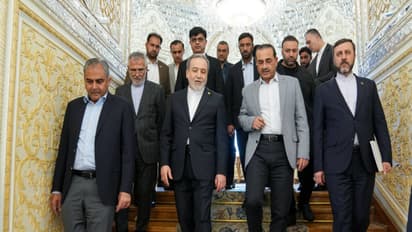
Further cementing these continuous consultations, official images released on Iran's presidential website showed Munir in a meeting with Iranian President Masoud Pezeshkian on Saturday, ahead of another scheduled session with Araghchi. State broadcaster IRIB indicated that this subsequent meeting at the foreign ministry was slated to be a "very detailed and probably long" legal review.
Iran's Broader Regional Outreach
Tehran's intense regional outreach has not been limited to Islamabad. Simultaneously, Araghchi held diplomatic phone calls with his counterparts from Turkey, Iraq, and Qatar, as reported by the IRNA state news agency.
IRNA further noted that the Iranian foreign minister reviewed "ongoing diplomatic efforts and trends to prevent escalation of tensions and to end the war" during a conversation with Omani Foreign Minister Badr Albusaidi.
Mediation Efforts and Sticking Points
These multiple diplomatic tracks reflect the complex web of regional mediation. While Oman has historically acted as a backchannel mediator between Tehran and Washington, Iran has framed Pakistan as a participant in mediation tracks involving Iran and the United States.
However, the path to lasting peace remains fraught with friction. Currently reviewing the latest American proposals, the Iranian leadership has blamed Washington for stalling progress, accusing the US administration of "excessive demands" in the negotiations. Ultimately, despite a round of direct discussions arranged in Islamabad last month, alongside weeks of quiet backchannel diplomacy, an official agreement to permanently conclude the hostilities remains elusive. (ANI)
(Except for the headline, this story has not been edited by Asianet Newsable English staff and is published from a syndicated feed.)