US Trade Deal: How India Outpaces China, Pakistan, Bangladesh With 18% Tariff
Synopsis
A new US-India trade deal reduces American tariffs on Indian goods to 18%, a sharp drop from a previous 50% punitive rate. This gives India a significant competitive export advantage over Asian rivals like China.
Historic Tariff Cut in India‑US Trade Deal
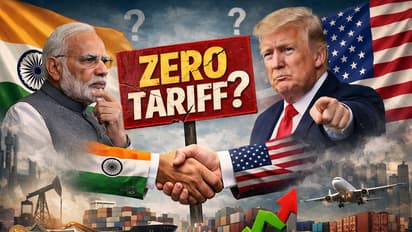
In a major development in bilateral economic relations, the United States and India have struck a trade agreement that significantly reduces US tariffs on Indian goods to 18%. The new tariff rate marks a departure from punitive levies previously imposed and places India ahead of several regional competitors in export competitiveness. US President Donald Trump announced the agreement after discussions with Indian Prime Minister Narendra Modi, describing the move as reflective of strong economic ties between the two democracies.
Under the fresh deal, Washington has dismantled the punitive tariff structure that had reached as high as 50% on Indian imports — a figure that combined a 25% reciprocal levy with an additional 25% penalty tied to India’s prior purchases of Russian oil. With this penalty lifted, the agreed 18% tariff now becomes the overall effective rate on Indian goods entering the US market. India has, in turn, committed to reducing its own tariffs on US products, potentially eliminating duties altogether.
Competitive Advantage for Indian Exports
The new tariff regime gives India a strategic edge over several export rivals in Asia and beyond. With an 18% duty rate, India now faces lower US tariff barriers than neighbouring export economies such as Bangladesh and Vietnam, which are subject to 20%, and Indonesia at 19%.
Even Pakistan and other South Asian rivals face slightly higher levy rates on their exports. Compared with China — where tariffs remain significantly higher at around 34% — India appears to have gained a marked pricing advantage in the American market.
Prime Minister Narendra Modi welcomed the development, suggesting that reduced tariffs would bolster “Made in India” products and support domestic manufacturing. Indian firms, especially those in textiles, engineering goods, gems and jewellery, and chemicals, could stand to benefit from improved market access and demand.
Strategic and Economic Implications
Beyond the tariff cuts themselves, the deal carries broader strategic and economic implications. India agreed to halt purchases of Russian crude — a key point of US pressure — and is expected to increase its imports of US energy products, including crude and potentially oil from Venezuela. This energy realignment supports US foreign policy goals linked to the Ukraine conflict and global energy markets.
The tariff reduction arrives shortly after India concluded a comprehensive trade agreement with the European Union, signaling New Delhi’s broader push to secure favorable external trade partnerships. Combined deals with both the US and the EU are expected to invigorate investor confidence, strengthen currency performance, and contribute to India’s export‑led growth trajectory in 2026.
Challenges and Future Outlook
Despite the celebratory tone, analysts caution that detailed timelines, enforcement mechanisms, and sector‑specific provisions remain unclear. Implementation will require careful navigation, particularly in sectors sensitive to global competition. Additionally, while the tariff cut enhances India’s export prospects, the broader geopolitical context — including energy sourcing and alignment with US strategic interests — poses challenges that will require ongoing diplomatic engagement.
Overall, the India‑US tariff deal represents a pivotal step in reshaping bilateral trade relations, offering India a competitive edge in the US market while balancing economic and strategic priorities in a rapidly evolving global landscape.