G7 announces coordinated oil reserve release to stabilize markets
Synopsis
G7 leaders held a virtual summit to address the global energy crisis, agreeing to a coordinated release of 100 million barrels from strategic reserves to stabilize oil and diesel prices and protect consumers from market shocks.
G7's Coordinated Emergency Measures
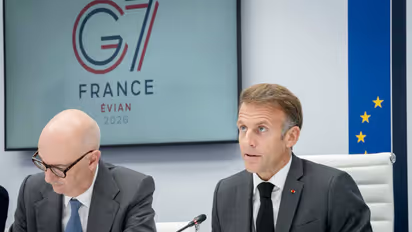
Facing severe energy price shocks that threaten global economic stability, Group of Seven (G7) leaders on Friday announced a series of coordinated emergency measures to protect consumers and stabilise global oil markets following a virtual summit. Placing consumer relief at the top of their agenda, G7 leaders pledged immediate steps to mitigate market shocks, with a major emphasis on easing pressure on global diesel supplies and prices.
"Facing unprecedented volatility in oil markets — with surging prices threatening economic stability and the well-being of our citizens — we have agreed on decisive, coordinated measures to stabilize immediate energy supplies, shield households and businesses from price shocks, and strengthen the long-term resilience of global energy systems," the leaders stated in the joint communique.
To deliver rapid market relief, the alliance agreed to a coordinated drawdown of emergency oil reserves through the International Energy Agency (IEA), declaring that member states "will implement our commitments with a coordinated release through the IEA of 100 million barrels to begin immediately over 4 months, including a frontloaded substantial diesel release within the first 20 days by G7 members and partners." In addition to stock releases, the leaders agreed to coordinate maintenance schedules across G7 refineries to prevent simultaneous shutdowns and temporarily boost utilisation rates. The group also called on non-member partners with significant refining capacity to increase diesel production, while reaffirming a commitment to refrain from export restrictions or trade bans on energy products between G7 nations.
Condemnation of Middle East Security Threats
Beyond immediate energy market intervention, the G7 directed sharp condemnation toward security threats in the Middle East, emphasising the direct danger posed to vital commercial maritime passages. "We condemn Iran’s continued attacks against its regional neighbours and its disruption of international trade, energy security and the global economy," the joint statement noted. Addressing ongoing vulnerabilities in key shipping lanes, leaders called for the "immediate and full restoration of navigational rights and principles in the Strait of Hormuz" while commending US efforts to ensure the free flow of commerce through the waterway.
Stance on Russia Sanctions Maintained
Reiterating their stance on stability in Eastern Europe, G7 leaders confirmed that economic pressures against Moscow will remain in place despite ongoing market volatility. "We will maintain sanctions against Russia while working with the IEA and global partners to prevent further spillovers into fuel, gas, and other commodity markets," the communique stated.
Monitoring and Follow-Up
Closing the summit, leaders directed the IEA to monitor the implementation of these commitments and deliver a follow-up impact report within 20 days, complete with recommendations for stock replenishment. "Our citizens’ concerns about energy prices remain a top priority," the leaders concluded. "We will monitor developments closely and stand ready to adjust measures as needed."
Macron Reiterates Key Takeaways
Briefly summarising the outcome of the summit shortly after the meeting, French President Emmanuel Macron highlighted the key takeaways and reiterated the alliance's joint effort to address petroleum prices, particularly diesel. He wrote in a post on X that the leaders "agree to work in a coordinated manner to help bring down the prices of petroleum products, particularly diesel. We have decided to: → make production more flexible to produce at the maximum capacity of our refineries, → release our strategic reserves up to 100 million barrels, within 4 months, with our partners, under the coordination of the International Energy Agency, → take no measures to restrict the exchange of energy and petroleum products between partner countries."
Je viens de réunir les dirigeants du G7 pour évoquer la situation énergétique mondiale. Nous sommes d’accord pour travailler de manière coordonnée pour contribuer à la baisse des prix des produits pétroliers, notamment du diesel. Nous avons décidé de : → flexibiliser la… pic.twitter.com/ilaXb94kD6 — Emmanuel Macron (@EmmanuelMacron) October 2, 2026
Diplomatic Efforts Preceding the Summit
Earlier in the day, a French diplomatic source said that the French President has spoken with US President Donald Trump and Canadian Prime Minister Mark Carney on the global energy situation, stressing the need for coordinated efforts to tackle rising fuel prices and ensure the availability of refined petroleum products worldwide, According to the source, Macron spoke with Trump overnight and discussed the need for countries to work together to address the rising cost of fuel and secure global supplies of refined products. He also held a conversation with Carney on the same issues.
France, which holds the G7 presidency this year, is working with the International Energy Agency (IEA) and intends to work with the G7 leaders to coordinate measures aimed at easing price pressures and ensuring the security of crude oil and refined product supplies. Macron emphasised that G7 countries share a common interest in taking concerted action to address the energy situation, while avoiding export restrictions. (ANI)
(Except for the headline, this story has not been edited by Asianetnews Editorial staff and is published from a syndicated feed.)