Ethiopia Volcano Eruption After 10,000 Years: Locals Describe ‘Bomb-Like’ Blast; New Videos Emerge (Watch)
Synopsis
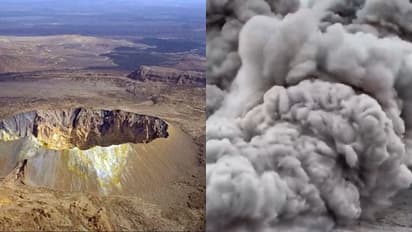
A rare eruption in Ethiopia’s Afar region has stunned residents as the Hayli Gubbi volcano erupted after 10,000 years. Locals describe a powerful, bomb-like blast as thick ash blanketed villages. New eyewitness videos show the dramatic scenes.
A remote volcano in Ethiopia’s Afar region, which had been silent for nearly ten thousand years, erupted without warning over the weekend. It sent a large column of ash rising about 15 kilometres into the sky. The sudden eruption plunged nearby communities into darkness, woke residents from their sleep and created widespread fear in an area with no previous record of such activity. New videos shared online show thick clouds of ash spreading across the landscape, highlighting the scale of an event that local people never expected to witness.
Ash Drifts Across Border
The Hayli Gubbi volcano, located in one of Ethiopia’s most isolated desert regions, became active early on Sunday. The eruption covered the Afdera village and nearby settlements with heavy layers of grey ash. Weather officials said the ash plume travelled across the Red Sea and moved towards Yemen and Oman.
Communities Struggle With Fallout
Local administrator Mohammed Seid said there were no reports of human or animal deaths. However, he warned that the impact on pastoral communities could be serious. Most families depend on open grazing, and with the fields now covered in ash, animals are finding it difficult to feed. This has raised fears of long-term economic problems in an area already affected by drought and harsh weather.
Seid also noted that there is no historical record of the Hayli Gubbi volcano erupting before, which has left residents shocked and uncertain about what might happen next.
‘It Felt Like a Bomb Had Gone Off’: Eyewitness
Residents described the eruption as frightening and unexpected. Many were awakened by a loud, deep roar that echoed across the desert, followed by a strong shockwave that shook homes and rattled windows.
One resident, Ahmed Abdela, said the explosion was so sudden that it felt like a bomb had gone off, sending smoke and ash into the air. He added that the sky turned dark almost instantly.
Uncertainty Ahead
Emergency teams are still assessing the situation. The main concern is the wellbeing of herding families whose animals now have little access to clean grazing land. With the volcano showing activity after thousands of years, authorities have advised people in the region to remain alert until conditions improve.