Did Ali Khamenei Reject Son Mojtaba as Successor? Report Reveals Iran Succession Twist
Synopsis
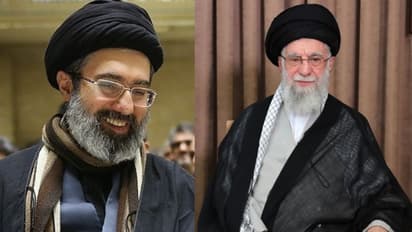
Following the death of Ayatollah Ali Khamenei, his son Mojtaba has been appointed Iran's new Supreme Leader. The succession is controversial amid reports that the late leader opposed his son taking power, allegedly stating this in his will. The Islamic Revolutionary Guard Corps (IRGC) was reportedly instrumental in securing Mojtaba’s appointment.
Fresh revelations about Iran’s leadership transition have sparked global debate after reports suggested that the late Supreme Leader Ayatollah Ali Khamenei did not want his son, Mojtaba Khamenei, to succeed him.
According to a report by the New York Post, Khamenei had explicitly expressed opposition to his son taking over the country’s most powerful political and religious position. However, Iran’s powerful military establishment, particularly the Islamic Revolutionary Guard Corps (IRGC), is believed to have played a decisive role in ensuring Mojtaba’s rise to power despite that alleged opposition.
The controversy comes in the aftermath of a major political upheaval in Iran following the death of Ayatollah Ali Khamenei during escalating regional conflict. His death created an immediate leadership vacuum in the Islamic Republic, triggering a rapid succession process overseen by the Assembly of Experts, the clerical body responsible for appointing Iran’s Supreme Leader.
Reports indicate that in his will, Ali Khamenei had clearly stated that Mojtaba should not be considered as his successor. According to sources cited in international media, the late leader believed his son lacked the political experience and credentials necessary to lead the country. Critics also argue that elevating a son to succeed his father could transform Iran’s clerical leadership system into a hereditary or dynastic structure—something the Islamic Republic has historically sought to avoid.
Also Read: From ‘Gatekeeper’ to Supreme Leader: The Quiet Rise of Mojtaba Khamenei Amid Iran War
Despite these concerns, Mojtaba Khamenei eventually emerged as the chosen leader after intense internal deliberations. Analysts say the IRGC—one of the most powerful institutions in Iran—played a crucial role in supporting his candidacy. Over the years, Mojtaba had reportedly built strong ties with senior commanders of the Revolutionary Guards while managing key aspects of his father’s office, giving him influence within the security establishment.
The Assembly of Experts formally announced Mojtaba Khamenei as Iran’s new Supreme Leader on March 8, following days of uncertainty and political manoeuvring. The appointment came after a brief transitional period during which an interim leadership council handled the responsibilities of the Supreme Leader while the country finalized the succession process.
However, the circumstances surrounding Mojtaba’s elevation remain controversial. Several analysts believe the Revolutionary Guards pushed strongly for his appointment because they viewed him as a leader who would maintain hardline policies and preserve the ideological direction of the Islamic Republic. Some critics have warned that this development could significantly expand the political influence of the IRGC within Iran’s governing structure.
The leadership transition also comes at a time of extreme geopolitical tension. Iran is currently facing escalating conflict with the United States and Israel, with military exchanges and regional instability intensifying across the Middle East. Observers say the urgency of the situation may have accelerated the succession process and influenced internal political decisions within the Iranian leadership.
Also Read: ‘Death to Mojtaba’: Tehran Erupts in Chants Against Iran’s New Supreme Leader (WATCH)
Mojtaba Khamenei himself had long been considered a possible successor but remained a controversial figure within Iranian politics. Unlike many previous senior clerics, he had never held a formal government position and rarely appeared publicly, leading some critics to question his leadership credentials.
Supporters within Iran’s conservative establishment, however, argue that Mojtaba’s close connections with the country’s security institutions and clerical networks make him capable of maintaining stability during a period of crisis. They see his appointment as a move to ensure continuity in Iran’s political and ideological leadership.
International reactions to Mojtaba Khamenei’s appointment have been mixed. Some analysts warn that his leadership could lead to a more confrontational foreign policy and increased tensions with Western nations. Others believe his rise may strengthen the influence of the Revolutionary Guards in Iranian politics, potentially reshaping the balance of power within the Islamic Republic.
As Iran navigates a turbulent political transition during an ongoing regional conflict, the question of how Mojtaba Khamenei ultimately came to power—and whether his father truly opposed his succession—continues to raise significant questions about the future direction of Iran’s leadership and governance.