China Poses Serious Strategic Threat to India Says Samir Saran
Synopsis
Samir Saran highlights how China's control over critical supply chains and grey-zone tactics poses a significant security challenge, urging India to diversify its industrial and defense dependencies to ensure long-term strategic autonomy.
The Changing Landscape of Modern Geopolitics
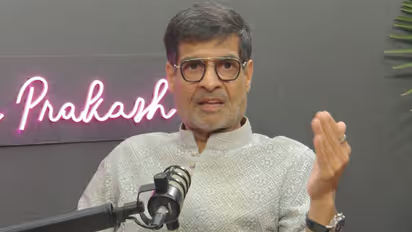
In an era marked by shifting global alliances and the erosion of traditional superpower dominance, China represents a clear and present danger to India's political and security architecture—not merely through conventional military buildup along the Line of Actual Control (LAC), but through a sophisticated, multi-domain strategy that leverages non-state actors, grey-zone tactics, and economic concentration risks. Speaking exclusively with ANI, Samir Saran, President of the Observer Research Foundation, observed that the 2020s have fundamentally rewritten the rules of modern warfare and geopolitical leverage. Superpowers can no longer dictate terms through sheer size or conventional carrier strike groups; smaller actors armed with asymmetric capabilities, low-cost drones, and economic leverage can inflict physical and strategic pain on major global powers.
Jamnagar: A Model for Strategic Leverage
A core pillar of Saran’s analysis is how targeted processing and refining infrastructure transforms an importing nation into a global strategic heavyweight. India’s refining capacity in Jamnagar serves as a prime example of global leverage. "Jamnagar made us a heavyweight in the energy business. Imagine a country which literally imports all of its energy, has a say on the global energy sweepstakes, simply because you are the capital of refining... It's like China and rare earth refining capabilities," said Saran. He drew a direct parallel to China’s dominance in critical materials, "China is not 90% of rare earth. China is 90% of refining of rare earth. It comes from everywhere, from Bolivia, Argentina." This comparison underscores the central danger China poses, Beijing’s control over refining and component supply chains allows it to choke critical inputs required by global industries, turning economic reliance into a strategic weapon.
India's capacity to process complex fuels (such as heavy crude from Venezuela or the Western Hemisphere) gives it a unique voice during times of global energy disruption, such as potential chokepoint blockades in the Strait of Hormuz or the Bab al-Mandab. Explaining why high-level foreign dignitaries and US officials prioritize visits to industrial hubs like Jamnagar, Saran noted, "And it was an acknowledgement of that particular reality that, in my view, made Rubio come to Jamnagar. Like Rubio would go to the semiconductor capitals or certain other parts of the world... I think you have some capability... it is an acknowledgement of the capabilities around refining, around the energy markets."
Countering Industrial Sabotage and Growth Constraints
While India has successfully established global manufacturing footprints in key high-tech sectors (such as exporting tens of billions of dollars in iPhones within years of setting up production lines), Dr. Saran warns against expecting passive acceptance from strategic competitors like China. When addressing whether Beijing will attempt to sabotage or place roadblocks in front of India's industrial push, Saran stated plainly, "China is going to put roadblocks for any manufacturing that we are doing... Listen, no one agreed to anything. China also know that they could not stop it... You are stating the obvious. No one is going to shoot itself." However, Saran firmly rejects the idea that China holds a veto over India's growth or global expansion, "Has anyone in the last 100 years been able to stop growth? Even in the most powerful American avatar, could they stop the Chinese?"
To insulate its security and political architecture against Chinese coercion, India cannot treat Jamnagar as a one-off achievement. Instead, it must replicate this model across rare earths, electronics, and semiconductor supply chains. "This should actually be a moment of great realization that what Jamnagar did to refining or what India has been able to do in refining, can we replicate in other domains as well? Can we in the next decade become the second or the largest refining capital of rare earths in the world? Can we create the rare earth refineries to... give the world an option of China plus one?" said Saran. Reliance's Jamnagar refinery complex operates at ~1.4 million barrels per day, making India a global exporter of refined diesel and aviation fuel despite relying heavily on crude imports. By deploying its domestic entrepreneurial spirit to set up mega complexes within 2–3 years, India can shift global dependencies and establish strategic autonomy. "The entrepreneurial spirit of India is to make India the most exciting place to invest into... right now, when we have to move from $4.5–$5 trillion to $10–$15–$20 trillion, we have to find that big capital flows opportunity. We have to find the big talent flows. We have to find the big resource flows. We have to become the hub," added Saran.
The Era of Multipolarity and Asymmetric Threats
Saran framed the fundamental shift transforming international security: the traditional era where major powers could single-handedly dictate global order has drawn to a close. Saran highlighted the changing balance of power. "Today you have seen both in Europe and in Asia that superpowers are having a tough time. And perhaps this is one clear sign that it is a multipolar world. You know, the debate of multipolarity has been settled in the battlefields of Europe and in the waters of the Middle East, that there are no superpowers left," he said. For India's security architecture, this means hostile powers can project influence without launching direct full-scale operations. Modern warfare increasingly relies on low-cost, high-impact asymmetric tools that level the field against traditional defense systems. A central component of the threat lies in how non-state actors and grey-zone tactics can be weaponised against critical supply chains.
Pointing to how economic leverage has shifted from financial systems to physical blockades, Saran warned, "What the Iranians have done is shown to the world that if you don't have the might of a dollar architecture... you can actually do a physical equivalent of economic sanctions. Iran has inflicted an economic sanction on the world that 'You will sanction me; I will sanction you.'" For India, the primary lesson of recent global conflicts—from the Red Sea trade disruptions to the European battlefields—is that hostile powers like China can weaponise asymmetric trade blocks and supply chain vulnerabilities. As Saran warned, Beijing could easily deploy non-state actors or swarm boats to block vital ocean passageways, turning physical economic sanctions into a strategic weapon. Non-state actors like the Houthis in the Red Sea demonstrated that targeted physical blockades can disrupt global shipping lanes, achieving economic sanction effects without using traditional financial/SWIFT systems.
Applied to India's northern and maritime perimeter, this model presents an acute security challenge. Hostile actors can disrupt trade corridors without formally declaring war. "Today you could have tomorrow... some clever country to our north, the Chinese, could have their unofficial swarm boats block certain passageways for certain countries' transits... Eventually, countries will start blocking through unofficial actions, specific countries... making their trade difficult and their economic activity impossible," said Saran. To safeguard its political and territorial integrity against Beijing's strategic encirclement, India must address vulnerabilities where single-source dependencies exist. Unlike Western systems that often relied on single external suppliers for critical assets, India's resilience depends on deep diversification. "We have multiple partners in the same domain. We don't have one partner for one domain. Our defense platforms are diversified. Our energy requirements are diversified... What we really need to be doing now... is knocking heads and coming up with a list of those 10, 12 domains where we have concentration risks, where we largely depend on one single source," said Saran.
He further advised that to safeguard its security architecture against Chinese encirclement and supply chain coercion, India cannot rely on single-domain dependencies. Instead, India must double down on true multi-alignment—diversifying its energy, defense, and technological supply chains across dozens of international partners to eliminate strategic concentration risks before they can be exploited. European nations depended heavily on single sources for core domains (e.g., Russian energy, Chinese manufacturing markets, US defense). In contrast, India's strategic autonomy model maintains a diversified crude oil basket (30+ sourcing countries) and defense suppliers. India's foreign policy relies on multi-alignment—sourcing crude oil across 30+ nations and diversifying defense procurement—to avoid single-point strategic vulnerabilities.
(Except for the headline, this story has not been edited by Asianetnews Editorial staff and is published from a syndicated feed.)