Bangladesh Elections 2026: BNP–Jamaat Face-Off in First Polls Since Hasina’s Exit; India Watches Closely
Synopsis
Bangladesh held its first national election in 2026 since the 2024 uprising that ousted Sheikh Hasina. With her party barred, BNP faces a resurgent Jamaat-e-Islami, reflecting a divide between secular and conservative politics.
Bangladesh held its national election on February 12, 2026, in what many observers describe as a defining moment for both domestic politics and regional stability. This vote stands out as the first full parliamentary poll since the 2024 mass uprising that toppled longtime Prime Minister Sheikh Hasina, ending her 15 year rule and forcing her into exile. The political landscape has radically shifted, introducing new uncertainties and elevating the stakes for neighbours, particularly India.
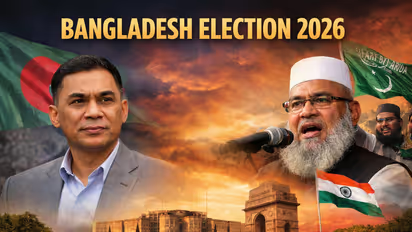
In the aftermath of the uprising, Bangladesh’s Awami League — Hasina’s party — was unable to contest, leaving a vacuum that rival forces are competing fiercely to fill. The Bangladesh Nationalist Party (BNP), led by Tarique Rahman, has emerged as the front runner, campaigning on promises of clean governance and reform. Rahman, returning from 17 years in exile, has aimed to distance the party from past criticism while appealing to a populace eager for change.
However, the resurgence of the Islamist Bangladesh Jamaat e Islami, now a key contender, has added a new layer of unpredictability to the race. Once marginalised and banned from elections under Hasina’s rule, Jamaat’s renewed strength signals a broader ideological contest for power.
The competition between BNP and Jamaat underscores deep divisions in Bangladesh’s society — between secular governance and conservative religious politics — with potential long term implications for policy and identity.
Elevating Stakes for India
For India, the outcome of this election is particularly consequential. Historically, Bangladesh India relations have been shaped by Hasina’s tenure, which saw generally close diplomatic ties. With her absence and the emergence of new political forces, New Delhi is observing closely how the election’s outcome might affect cooperation on security, trade, and border management. The resurgence of Jamaat — which has previously advocated positions less aligned with India’s strategic interests — introduces fresh uncertainty in bilateral relations.
Security on polling day was intense, with hundreds of thousands of personnel deployed, drones, CCTV and body worn cameras ensuring safer conduct at risk prone voting centres. This emphasis reflects the authorities’ aim to deliver a credible election after years marked by political repression, crackdowns, and contested polls.
Bangladesh’s young and growing electorate — including millions voting for the first time — could play a pivotal role in shaping the outcome. Many citizens view this election not just as a contest for power but as a broader test of democratic restoration following years of turmoil, crackdowns, and questions about institutional integrity.