Shubman Gill Highlights Hardik Pandya's Vital Role in Indian Squad
Synopsis
Skipper Shubman Gill praises Hardik Pandya's unique all-round skills as India prepares for the ODI series against New Zealand, while balancing crucial Test match commitments for the World Test Championship.
Shubman Gill Lauds Hardik Pandya
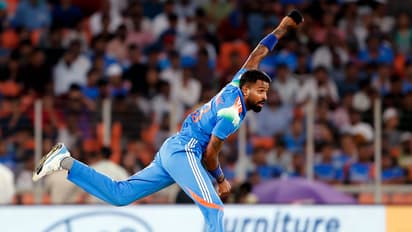
India skipper Shubman Gill highlighted Hardik Pandya's importance to the team, describing him as a rare all-rounder whose ability to contribute with both bat and ball makes him an invaluable asset. Gill particularly emphasised Pandya's versatility as a fast-bowling all-rounder, capable of operating with the new ball, through the middle overs and at the death. The Indian captain also expressed disappointment over Pandya's prolonged absence since the Indian Premier League (IPL) 2026, revealing that the team management had remained in regular communication with the all-rounder. He expressed hope that the all-rounder would regain full fitness, get some domestic cricket under his belt and return to the national side soon. Gill was speaking to the reporters on the eve of India's 1st ODI against New Zealand in Auckland on Tuesday.
"Hardik is a great player, and the qualities he brings to the team are rare. Not many players in world cricket possess the ability to be a genuine fast-bowling all-rounder who can bowl in every phase of the game, whether with the new ball, during the middle overs or at the death. On top of that, the kind of batting he brings to the team makes him extremely valuable," Gill said. "It's unfortunate that he hasn't been able to play since the IPL. We've had multiple conversations with him, and he was supposed to feature in the India matches, but unfortunately, he picked up a few niggles just before that. Hopefully, he gets fit soon, plays some domestic cricket and makes his return to the Indian team in the near future," he added.
Injury Setbacks and Squad Management
Challenges in Balancing Formats
Pandya’s return to competitive action suffered another setback, with a shin injury which ruled him out of the three-match ODI series against Australia A in October. Pandya had been named in the India A squad for the 50-over matches, which began on October 6 in Puducherry, subject to fitness clearance. However, he was advised to rest for 15 days after sustaining the shin injury.
Gill also explained that balancing the ODI and Test commitments has been challenging due to the tight scheduling between the two series. While he would have preferred the full World Cup probables to feature in all five ODIs, he stressed that the upcoming Test matches are equally important, particularly with the World Test Championship race becoming more competitive. The five-match ODI series starts on November 4. India will field a different squad for the final two ODIs, with key players, including skipper Shubman Gill, set to miss the matches to focus on preparations for the upcoming Test series. In Gill's absence, Shreyas Iyer will take over the captaincy responsibilities. Meanwhile, pace spearhead Jasprit Bumrah, who was not included in the ODI squad, will return to lead India's bowling attack in the Test series. The first Test is scheduled to begin on November 19 in Wellington.
"Both formats are equally important. If it were up to me and all the players were fit, I would have liked the entire squad that we are considering for the World Cup to get an opportunity to play all the matches. However, we also have to keep in mind that the two Test matches are extremely important," Gill said. "If there had been a T20 series between the ODI and Test assignments, we would have had the opportunity to play all five matches. But because the ODI and Test series are scheduled so close to each other, managing the players becomes difficult. The World Test Championship scenario has also become very interesting following the recent Australia-South Africa series, which has made the points table more competitive," he added.
He added that players selected for the Test squad would have to miss the final two ODIs to prepare for the longer format, as India look to strengthen their position in the WTC standings. "Hopefully, if we perform well in the Test series and then against Australia when they tour India, we will have a good opportunity to strengthen our position. That is why both formats are important to us. Unfortunately, because of the scheduling overlap, players who are part of the Test squad will have to miss the final two ODIs," he concluded.