India proposes criminal penalties for doping traffickers, not athletes
Synopsis
The Sports Ministry has proposed amendments to the National Anti-Doping Act to criminalise trafficking and supply of banned substances. The changes will target organised networks but will not subject athletes to criminal prosecution for violations.
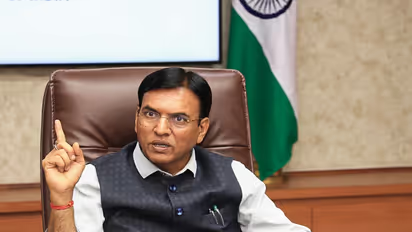
Union Minister for Youth Affairs and Sports Mansukh Mandaviya has proposed sweeping amendments to the National Anti-Doping Act to introduce criminal provisions targeting trafficking, illegal supply and organised networks involved in doping, while making it clear that athletes themselves will not face criminal prosecution merely for anti-doping rule violations or positive tests.
New Criminal Framework to Tackle Doping Ecosystem
In a public consultation paper issued on Thursday, the Sports Ministry said the current anti-doping framework is largely limited to sporting sanctions such as suspensions, disqualifications and stripping of medals, and lacks a dedicated criminal mechanism to tackle the organised ecosystem behind performance-enhancing substances.
The proposed amendments seek to criminalise trafficking, sale and distribution of prohibited substances and methods, administration of banned substances to athletes, supply of prohibited substances to minors, organised commercial activities linked to doping, and advertisements or paid promotions encouraging doping.
The ministry said doping had evolved beyond a sporting violation into an organised network exploiting athletes for profit, necessitating stronger legal intervention.
Focus on Traffickers, Athletes Spared Criminal Prosecution
"The Government's objective is to protect athletes and dismantle criminal networks profiting from doping," the ministry said. Under the proposed framework, athletes testing positive for banned substances would continue to be dealt with under the existing anti-doping regime through sporting penalties rather than criminal prosecution.
The focus of the amendments would instead be on traffickers, illegal suppliers, organised syndicates, support personnel and individuals administering prohibited substances to athletes.
Protecting Vulnerable and Young Athletes
The ministry also proposed enhanced penalties in cases involving minors or organised criminal groups, noting that young athletes are particularly vulnerable to manipulation and exploitation.
The proposed reforms aim to safeguard grassroots sport and protect the future of Indian athletes, the ministry added.
Alignment with International Standards and Safeguards
The framework has been drafted in line with India's obligations under the UNESCO International Convention against Doping in Sport and is consistent with the position of the World Anti-Doping Agency (WADA).
The ministry further clarified that athletes with valid Therapeutic Use Exemptions (TUEs) would remain protected, while bona fide medical practitioners providing emergency or urgent treatment would also be safeguarded under the proposed provisions.
The ministry said the reforms are intended to strike a balance between athlete protection, integrity of sport, public health and effective enforcement as India seeks to strengthen its clean sport framework amid its growing stature in international sports. (ANI)
(Except for the headline, this story has not been edited by Asianet Newsable English staff and is published from a syndicated feed.)