Update: We are polio-free, assures govt after Hyderabad scare
Synopsis
Amidst concerns over wild polio virus (P2 strain) being found in a Hyderabad drain, the Union Health Ministry today said it was a vaccine-derived virus and does not change the polio-free status of India.
However, as a precautionary measure, the ministry will hold a special immunisation drive in the high-risk areas of Telangana.
"India continues to be polio-free as the country has eradicated wild polio virus and the last case was seen on January 13, 2011 and it is more than 5 years that no wild polio virus has been detected," it said in a statement.
Speaking to Asianet Newsable, Rajeswar Tiwari, Principal Health Secretary said, "It is a low-risk strain. Still as per protocol, we will launch a preventive operation. There was nothing panic about this discovery of the strain."
"The strain was discovered during routine surveillance in Hyderabad. It's called 'Vaccine Derived Polio Virus' Type-2. The strain was found in sewage samples collected from a small area in the state capital. As per WHO protocols, surveillance has been underway for quite some time. We had sent the samples to a laboratory in Mumbai, which confirmed the existence of the 'Vaccine Derived Polio Virus' strain in the sewage sample," Tiwari said.
He said no alert had been sounded so far. But preventive measures would be taken up as per the WHO protocol, he added.
"This is not a widespread problem across the Telangana, nor even in Hyderabad. It's confined to a small area of the city. It's of a low-risk variety," he added, confirming that the discovery occurred on June 7.
The Health Ministry said the detected polio virus strain, which was found in a sewage sample collected near the Secunderabad railway station, is vaccine-derived polio virus (VDPV).
VDPV is a rare strain of the polio viruses that have genetically mutated from the strain contained in the Oral Polio Vaccine (OPV). The OPV contains live virus particles that get excreted by babies who are given the vaccine and gets into the sewage.
While the OPV protects children, these excreted virus particles can at times regain neurovirulence (the tendency or capacity of a microorganism to cause disease of the nervous system) including through contaminated drinking water, and can cause paralysis if consumed by humans.
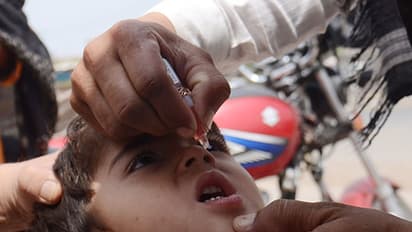
The special campaign will be held from June 20 covering high-risk areas of Hyderabad and Rangareddy districts of Telangana, where an estimated 300,000 children will be protected against polio using Inactivated Polio Vaccine (IPV).
Under the special campaign, children between the age group of six weeks and three years will be given an additional dose of the injectable polio vaccine (IPV). Vaccination booths will be set up in the areas being covered in these campaigns.
However, the campaign will not be conducted door-to-door.
"Parents of children living in these areas will be encouraged to ensure that their children get the IPV dose from the nearest vaccination booth which will provide additional protection against all types of polio," it said.
The last case due to wild poliovirus in India was detected on 13 January 2011 and the country was certified polio-free by WHO in March 2014.