SpaceX Is Taking More Control Of Nvidia Hardware, SemiAnalysis Says — With A Custom AI Rack For Earth And Orbit

Synopsis
SpaceX is developing Kessel, a custom Nvidia AI rack for Earth and orbit, SemiAnalysis said.
- SpaceX would buy Nvidia chips and source other components directly, gaining more control over suppliers.
- Kessel keeps 72 GPU packages but replaces internal NVLink cable cartridges with a central circuit board.
- Its 84-layer board uses fewer layers than Kyber’s earlier design but needs higher-grade material.
SpaceX (SPCX) is working on a custom AI rack that would let it buy Nvidia’s (NVDA) chips and choose more of the remaining hardware itself, SemiAnalysis said. The design, called Kessel, is intended for data centers on Earth and computing in orbit.
SPCX stock rose 1% on Tuesday to $143.09, logging its third session of gains.
Inside SpaceX’s Kessel Design
SpaceX would keep Nvidia’s chips while taking more control over the parts around them.
“Kessel also changes who buys the components: SpaceX plans to purchase chip packages from Nvidia and procure the rest directly, bypassing Nvidia’s L6 compute boards,” SemiAnalysis said on X. “That would give SpaceX more control over supplier selection and component sourcing.”
The hardware would get a new layout, too. Nvidia’s standard Vera Rubin NVL72 rack uses internal copper cable cartridges to connect its computing and switching hardware. Kessel would replace those cartridges with a central printed circuit board, called a passive PCB midplane.
It would keep Oberon’s 72 GPU packages, 18 compute trays and nine switch trays, but arrange the trays back-to-back around the board. It makes Kessel a smaller take on Nvidia’s Kyber design, which also uses circuit-board midplanes.
In March, SemiAnalysis revealed a Kyber configuration with 144 GPUs, twice Kessel’s count. “Think mini Kyber, with a smaller scale-up domain and a design intended for both terrestrial and orbital deployment,” the firm said.
Kessel: A Smaller Design With A Trade-Off
Kessel’s smaller design could be easier to manufacture, though it comes with a trade-off. SemiAnalysis said it calls for an 84-layer circuit board using M10 material, compared with 156 layers of M9 material planned for the earlier Kyber design.
“Fewer layers give it a more feasible manufacturing path, although the design requires a higher-grade material,” the firm said. Whether that is enough is an open question. “The question is whether this smaller version can make the midplane practical,” SemiAnalysis said.
SpaceX’s AI Buildout Needs More Power
Kessel comes as SpaceX ramps up its AI data center plans. Last week, SemiAnalysis said SpaceX had raised its 2027 capacity target to about 13 gigawatts, with 3.6 gigawatts already under construction across several sites. “We think it’s possible and have already identified >9GW of capacity,” the analysts said.
The firm pointed to expansions around Colossus and plans to build data centers on parts of SpaceX’s Starbase rocket campus. Power remains a challenge, though. SemiAnalysis had identified less electricity supply than the data centers would need.
Nvidia And SpaceX Look Beyond Earth
Nvidia and SpaceX are already working together on an AI computer for space. In August, they also planned to adapt its Vera Rubin NVL72 system for the first Starmind AI satellite. The company also plans to use Vera Rubin to expand the computing infrastructure behind Grok.
“SpaceXAI is taking this architecture from massive AI factories to the next frontier of computing in orbit,” Nvidia executive Ian Buck said. The work involves adapting the hardware for power, cooling, reliability and communications in space, while retaining Nvidia’s architecture and software.
SpaceX lists AI1’s computing payload at up to 250 kilowatts peak and 175 kilowatts on average. Laser links would send the AI results through the Starlink network.
The satellite design also leaves room for chips from other suppliers. “We are AI chip vendor agnostic. Our system architecture supports compute modules from any provider,” SpaceX says on its Starmind page. The company is building its Gigasat Factory in Bastrop, with plans to produce and deploy thousands of AI satellites starting as soon as late 2027.
How Do Retail Traders Feel About SPCX?
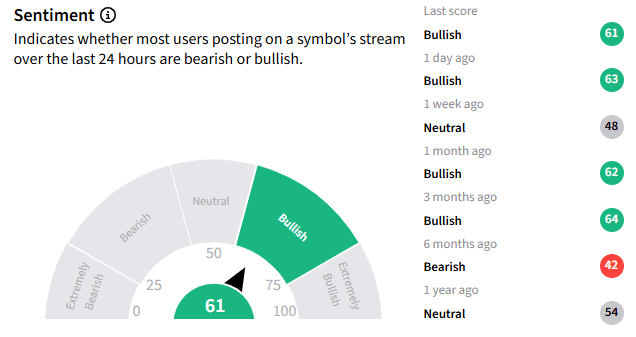
On Stocktwits, retail sentiment for SPCX jumped to ‘bullish’ from ‘neutral’ levels a week ago amid ‘normal’ message volume.
SPCX stock has declined 11% year-to-date.
For updates and corrections, email newsroom[at]stocktwits[dot]com.<
Stay updated with all the latest Business NewsShare Market NewsIPOsGold PriceDA Hike8th Pay CommissionAsianet News Official App