Rocket Lab Sets Another Spacecraft Milestone As Viasat Advances $81M NASA Program
Synopsis
The mission will test commercial satellite communications services for low Earth orbit operations as NASA prepares to retire its existing Tracking and Data Relay Satellite fleet.
- Viasat plans five months of on-orbit testing through March 2027, covering space-relay and direct-to-ground communications.
- The demonstrations will test Ka- and L-band relay services alongside S-, X- and Ka-band direct-to-ground links.
- Rocket Lab supplied key spacecraft components and a new L-band radio for testing telemetry, tracking and command applications.
Rocket Lab (RKLB) and Viasat (VSAT) shares were in focus on Wednesday after Viasat successfully launched its Maxwell spacecraft on Tuesday for a NASA communications demonstration.
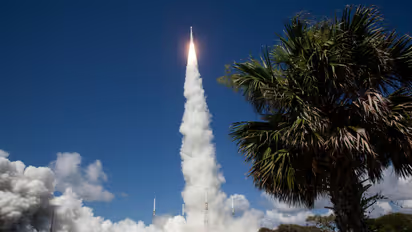
The mission is part of Viasat’s work under two NASA Communications Services Project contract awards totaling $81 million. Rocket Lab built the spacecraft, which flew aboard SpaceX’s Bandwagon-5 rideshare mission.
This is Viasat’s second demonstration under NASA’s Communications Services Project. Its first demonstration involved relaying launch telemetry during Blue Origin’s New Glenn launch in November 2025.
“Yesterday’s launch represents the culmination of years of innovation, engineering and collaboration across Viasat, NASA and our industry partners,” said John Reeves, vice president of Space and Mission Systems at Viasat Government.
RKLB shares traded 4.8% higher, VSAT gained 3%, and SPCX traded 8% higher, at the time of writing. The rally in SpaceX shares came after the company reported better-than-expected earnings on Tuesday.
What Will Viasat Test?
Viasat will conduct on-orbit tests and demonstrations over five months, through March 2027, to demonstrate its satellite communications services for low Earth orbit (LEO) missions.
The demonstrations will test Viasat’s Ka- and L-band relay services, which are designed to support low-latency communications for spacecraft in LEO. The company will also test direct-to-ground communications through its Real-Time Earth Ground-Station-as-a-Service platform, which supports S-, X- and Ka-band communications.
The work is part of NASA’s Communications Services Project, which is evaluating commercial satellite communications services as the agency prepares to retire its Tracking and Data Relay Satellite fleet.
What Is Rocket Lab’s Role?
Rocket Lab built the Maxwell spacecraft at its Long Beach facility, incorporating in-house components and subsystems including solar panels, reaction wheels, star trackers, and flight and ground software. The spacecraft provides power, communications, propulsion and attitude control for the demonstration.
Rocket Lab also supplied an L-band radio to support tests of telemetry, tracking and command communications through Viasat’s L-band network.
How Retail Views RKLB, VSAT and SPCX
On Stocktwits, retail sentiment toward VSAT remained in ‘bearish’ territory over the past 24 hours, with message volume at ‘high’ levels. Sentiment toward RKLB stayed ‘bullish’, while message volume also remained ‘high’.
Meanwhile, retail sentiment toward SPCX climbed to ‘extremely bullish’, accompanied by ‘extremely high’ message volume over the past 24 hours. SPCX was also among Stocktwits’ trending tickers at the time of writing.
One user on Stocktwits warned of an impending selloff, predicting that RKLB shares would close below $50.
View this Stocktwits post
One bullish user on Stocktwits said they expect SPCX to benefit investors over time, adding that the stock’s recent gains were driven by the company’s earnings report released the previous day.
View this Stocktwits post
RKLB shares have dropped more than 23% year to date, while VSAT shares have gained over 82% and SPCX shares have risen more than 8% over the same period.
Also read: Micron Says Rival DRAM Design Has ‘Fundamental Problems’: Targets Next-Gen Memory With 3D DRAM, New Chips Planned For 2027
For updates and corrections, email newsroom[at]stocktwits[dot]com.<
Stay updated with all the latest Business NewsShare Market NewsIPOsGold PriceDA Hike8th Pay CommissionAsianet News Official App