META Stock Rides Muse AI To Best Quarter In Over 2 Years — But Analyst Warns Monetization Could Be 'Notoriously Slow'

Synopsis
Needham's Laura Martin says Muse is free and walled off from Meta's ad business.
- Muse drew about 5 million downloads in its first three weeks, topping free-app charts in the U.S. and Canada.
- WhatsApp didn't carry ads until 2025, more than a decade after Meta bought it.
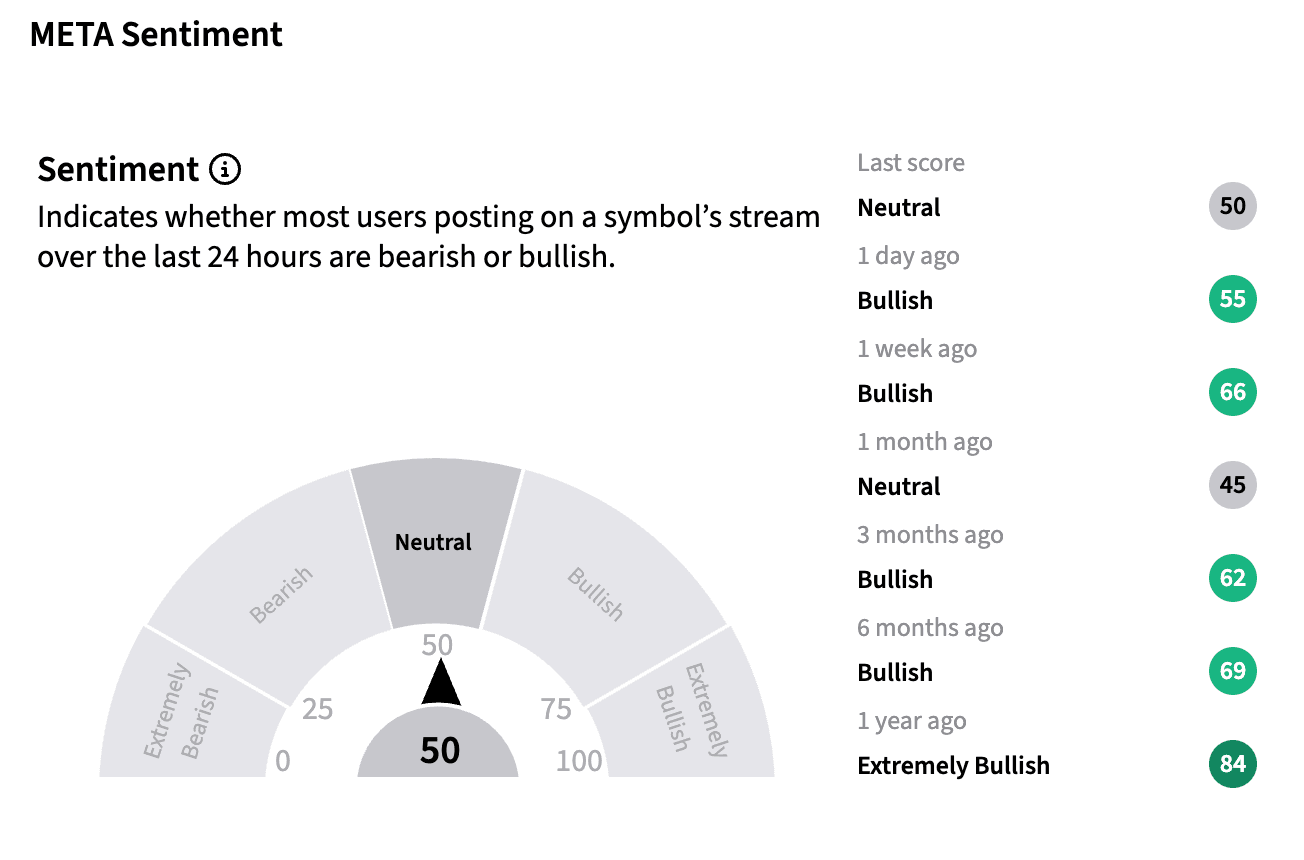
- Wall Street's consensus is still a 'strong buy,' while retail sentiment on Stocktwits has cooled to 'neutral.'
Meta Platforms Inc.'s stock just had its best quarter in more than two years. But one Wall Street analyst isn't convinced the product behind the rally will pay off quickly.
Meta shares rose nearly 29% in the third quarter, their strongest showing since the first quarter of 2024. Among the "Magnificent Seven" megacap tech stocks, only Microsoft Corp. did better, up about 38%.

Most of Meta's handsome gains came in September, when the stock rocketed about 27% after the launch of Muse, a personal AI agent that can send emails, shop and book travel for users. Meta followed up with new AI-powered smart glasses.
The stock closed September at $725.18, about 8% below its record close of $790, set in August 2025.
Why Needham Is Cautious On META
On Thursday, Needham analyst Laura Martin reiterated a 'hold' rating on Meta and did not set a price target.
Martin was upbeat that Meta has "clearly pivoted away from the Metaverse and toward personal Agentic AI, with 'Muse' at the center," according to an excerpt of her note on Price Target. She noted that Muse drew about 5 million downloads from Sept. 8-30, topping the free-app charts in the U.S. and Canada.
Her concern is the payoff. The company is "notoriously slow at monetizing new products," she wrote. Muse is free, and Meta has said it won't share conversations and data with its advertising business, "suggesting low monetization."
Even Meta’s launch of an enterprise platform at the end of last month received a thumbs down from the market, with a Morningstar analyst saying the shift to enterprise is “unproven, as consumer products remain at the center of the company.”
META: A Track Record Of Delayed Monetization
Mark Zuckerberg-led Meta bought Instagram for $1 billion in 2012 and ran its first ads there in late 2013. WhatsApp, acquired in a $19 billion deal in 2014, didn't get ads until June 2025, more than a decade later. Facebook itself had little mobile ad revenue when it went public in 2012.
| Product / Platform | Acquisition / Launch | Cost / Investment | Monetization Timeline & Reality |
| Launched 2004 | N/A | Introduced self-serve ads in 2007; full monetization engine took over 4–5 years to scale. | |
| Acquired April 2012 | $1 billion | Initial ads debuted late 2013; no meaningful ad revenue scale until 2015–2016 (3–4 years). | |
| Acquired February 2014 | $19 billion | Took nearly a decade to deploy revenue drivers; WhatsApp Business messaging API pricing models only began scaling significantly past 2022–2023. |
Some other major bets still have not paid off. Meta bought virtual reality company Oculus for $2 billion in 2014. Its Reality Labs unit, which houses its metaverse work, has since lost more than $80 billion.
Muse AI Has Other Risks: Analyst
Needham estimates Meta will spend more than $135 billion on capital projects this year and burn more cash than it brings in, saying hardware such as glasses typically carries thinner margins than Meta's software business.
Another issue she flagged was that Muse works by acting on other companies' websites and apps, and Meta "does not control the endpoints that Muse needs to succeed," Martin wrote.
Amazon.com, Inc. recently blocked Muse from shopping on its site, and Martin fears many "incumbent platforms may refuse to let META disintermediate direct relationships with consumers."
If more large commerce, travel, financial or media platforms restrict access, Muse's "addressable market and economics may be smaller than we expect," she added.
Competition is also arriving quickly: OpenAI launched its own autonomous agents earlier this week.
META Stock: Wall Street Vs Retail Traders
Needham's analyst is currently in the minority on Wall Street. The consensus rating among 63 analysts is 'Strong Buy,' according to Koyfin data, and their average price target implies about 9.5% upside from the last close.
Retail traders have grown more guarded. On Stocktwits, sentiment around Meta shifted to 'neutral' from 'bullish' over the past quarter. Message volume slightly eased, though the stock's watcher count rose 2.2% over the same period.
That caution came amid a rough macro backdrop, with the Federal Reserve raising interest rates in September for the first time since 2023, as the Iran conflict pushed oil prices higher and inflation stayed elevated.
Meta reports third-quarter results on Oct. 28 after the market closes. Investors will look for details on how Muse will make money for Meta and for any changes to capital spending plans.
For updates and corrections, email newsroom[at]stocktwits[dot]com.<
Stay updated with all the latest Business NewsShare Market NewsIPOsGold PriceDA Hike8th Pay CommissionAsianet News Official App