Fed’s Goolsbee Says AI Data Center Boom Looks Like ‘Old-Fashioned Demand Overheating’ – Flags Inflation Risks
Synopsis
According to the Chicago Fed president, inflation remains the bigger concern despite surprisingly strong economic growth and relatively stable employment.
- Goolsbee said inflation is emerging in services less tied to tariffs and oil, warning that overheating is “extremely painful” to “get rid of”.
- He said consumer spending, not data center investment, has been the main driver of growth.
- AI could ultimately mean “long-run deflation,” but anticipation of those gains “can lead to inflation right now,” he added.
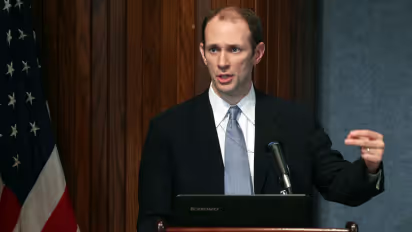
Chicago Federal Reserve President Austan Goolsbee said Monday that the rapid expansion of artificial intelligence (AI) data centers is beginning to overheat, potentially adding to inflation pressures that have persisted longer than expected.
“This stuff with the AI data center buildout is, to my eyes, starting to look more just like old-fashioned demand overheating,” Goolsbee said during a discussion at a Leadership Greater Chicago event in Chicago, Illinois.
He cited rising costs for land, electricity, computer chips, and construction, along with difficulty hiring skilled workers such as HVAC technicians, as signs of growing capacity constraints.
Inflation Pressures Extending Beyond Tariffs
According to Goolsbee, inflation remains his primary concern, particularly as price increases emerge in services less directly affected by tariffs and higher oil prices.
“We've been moving up to what historically we'd consider full employment, and the big problem has all been on the inflation side,” he said. “Conventional wisdom is to be aggressive up front to never let the economy overheat. Because once it gets overheated, it's extremely painful to get rid of.”
According to him, inflationary pressures from supply shocks were expected to fade, but they have persisted longer than anticipated. Unlike temporary supply shocks, demand-driven overheating can produce more persistent inflation, making it harder to bring prices under control.
Goolsbee said conventional economic thinking favors aggressive action before an economy overheats, given how difficult it can be to reverse such inflation. He added that there is “no question” what central banks must do when such overheating occurs, although he did not specify an interest-rate move.
Growth Remains Strong Despite Low Hiring
Goolsbee described economic growth as “surprisingly strong” and the labor market as stable, although he acknowledged that hiring remains low. According to the Chicago Fed CEO, broad-based consumer spending has driven economic expansion.
“For all the talk about data centers, it's actually been broad-based consumer spending rooted in a low unemployment rate and fairly solid wage growth that has been the driver,” he said.
Goolsbee also noted a disconnect between weak consumer sentiment and actual spending, suggesting that elevated food and gasoline prices may help explain why households remain pessimistic despite continued consumption.
AI Could Boost Productivity, Wage Growth
Despite his near-term inflation concerns, Goolsbee expressed optimism about AI's potential to improve long-term economic productivity. He said productivity growth has exceeded its pre-pandemic trend, running at roughly 2.5% rather than 1.5% over the past two years.
Sustaining faster productivity growth over 15 to 20 years could substantially raise incomes and support higher wages without generating inflation, he stated.
Goolsbee added that a substantial AI-driven productivity boost could ultimately mean “long-run deflation,” but anticipation of those future gains “can lead to inflation right now,” as rising equity valuations encourage spending and businesses accelerate data center investment.
Goolsbee on AI Bubble Concerns
Goolsbee acknowledged that rapid investment in AI could become overextended. “The bigger the hype, the more nervous I am that we're going to overheat what the economy is capable of in the next six months,” he said.
While he drew parallels with the internet boom, Goolsbee said, “I'm not saying that it's a bubble, but it's certainly almost unprecedented levels of physical investment.”
As of this writing, the Nasdaq-100 index was up nearly 3%, even as retail sentiment toward the Invesco QQQ Trust (QQQ), an exchange-traded fund that tracks the index, remained in ‘bearish’ territory on Stocktwits.
See Also: META, AMZN Stocks Jump As JPMorgan Picks Pair Over Alphabet — Sees Stronger AI Returns, Cloud Growth
For updates and corrections, email newsroom[at]stocktwits[dot]com.<
Stay updated with all the latest Business NewsShare Market NewsIPOsGold PriceDA Hike8th Pay CommissionAsianet News Official App