Karnataka: Dakshina Kannada Man Successfully Cultivates Rare Western Ghats Mooty Fruit
Synopsis
A man from Dakshina Kannada has successfully cultivated the rare Mooty fruit, an endemic species of the Western Ghats listed as Near Threatened by the IUCN. The nutrient-rich wild fruit, known for growing directly on the trunk, is now bearing fruit after years of careful cultivation.
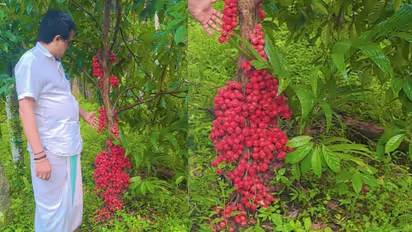
A Vastu expert from Bilinele village near Subramanya in Kadaba taluk of Dakshina Kannada has successfully cultivated one of the Western Ghats' rarest wild fruits, locally known as the Mooty fruit. S. Prasad Muniyangal, who planted more than 100 saplings three years ago, is now celebrating as the trees have started bearing fruit. The achievement is significant because the species is endemic to the Western Ghats and has been listed as Near Threatened by the International Union for Conservation of Nature (IUCN).
Rare Fruit Thrives With Minimal Maintenance
Three years ago, Muniyangal sourced more than 100 saplings from a nursery and planted them about 10 feet apart. The trees require very little maintenance and have adapted well to the local climate.
During June and July, the trees are laden with attractive, colourful fruit clusters, with each bunch containing around 25 to 50 fruits.
Rich In Vitamin C And Other Health Benefits
The Mooty fruit is an excellent source of Vitamin C, making it beneficial for eye health. It is also rich in dietary fibre, which aids digestion. Like figs, it is a low-calorie wild fruit, making it a suitable choice for those looking to manage their weight.
The fruit is commonly used to prepare curries (saaru) and pickles. According to growers, applying potassium-rich fertiliser helps produce sweeter fruits.
Known By Several Local Names
The fruit is known by several names across the region. In Kannada, it is called Koli Juttu Hannu, Koli Kukke, and Mayndapuli, while in Malayalam it is known as Mootipazham or Mootippuli. Its scientific name is Baccaurea courtallensis.
A Tree That Bears Fruit On Its Trunk
One of the most distinctive features of the Koli Kukke tree is that its fruits grow directly from the main trunk rather than from its branches.
The medium-sized tree grows between 10 and 18 metres tall and has grey bark covered with small knots. It flowers between August and December, producing separate male and female blood-red flowers on the trunk. While the male flowers appear across the trunk, the female flowers are mostly concentrated near the base. These later develop into dense clusters of deep crimson fruits, giving the lower portion of the tree the appearance of being covered with a red carpet.
A Near Threatened Species Of The Western Ghats
The Koli Kukke tree is endemic to the rainforests of the Western Ghats, meaning it is naturally found only in this biodiversity hotspot.
Its natural habitat extends from Kodagu and Dakshina Kannada in Karnataka to parts of Kerala and Tamil Nadu, including Kanyakumari. Due to habitat loss and deforestation, the IUCN has classified the species as Near Threatened on its Red List.
Takes Four To Six Years To Bear Fruit
Whether grown from seed or through grafting, the tree typically takes four to six years to begin bearing fruit on its trunk.
The successful cultivation of this rare species highlights the importance of conserving the Western Ghats' unique biodiversity and encouraging the cultivation of native, threatened plants.
Stay updated with the Breaking News Today and Latest News from across India and around the world. Get real-time updates, in-depth analysis, and comprehensive coverage of India News, World News, Indian Defence News, Kerala News, and Karnataka News. From politics to current affairs, follow every major story as it unfolds. Download the Asianet News Official App from the Android Play Store and iPhone App Store for accurate and timely news updates anytime, anywhere.