Rogue DNA Rings May Unlock Early Detection of Deadly Brain Cancer
Synopsis
Scientists discover rogue DNA rings (ecDNA) driving glioblastoma’s deadly growth. Early detection of these DNA fragments could open new doors for diagnosis, treatment, and survival in one of the toughest brain cancers.
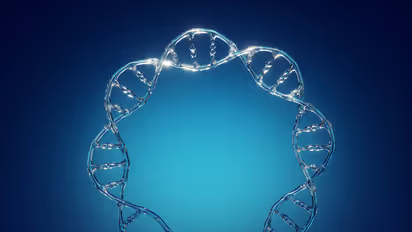
Scientists have uncovered a surprising culprit that could be fueling the deadliest form of adult brain cancer, glioblastoma: tiny rogue DNA rings known as extrachromosomal DNA, or ecDNA. These free-floating fragments of genetic material, which exist outside of normal chromosomes, may not just appear once a tumor has taken hold—they could show up even earlier, quietly laying the groundwork for the disease’s aggressive growth.
The discovery, published in Cancer Discovery, offers fresh hope for finding glioblastoma sooner and treating it more effectively.
Why Glioblastoma Is So Hard to Treat
Glioblastoma is one of the toughest cancers doctors face. Despite decades of research, the average survival time remains just over a year after diagnosis. Treatments such as surgery, radiation, and chemotherapy can slow the disease but rarely stop it. A major challenge has been understanding what gives glioblastoma its ability to grow quickly and resist therapies.
That’s where ecDNA comes in.
Rogue DNA Rings as Early Instigators
An international research team led by Dr. Benjamin Werner of Queen Mary University of London and Professor Paul Mischel of Stanford University found that ecDNA isn’t simply a by-product of tumor growth. Instead, these DNA rings often appear at the very beginning of glioblastoma’s life cycle—sometimes even before the tumor itself has formed.
The researchers used patient tumor samples, high-resolution imaging, and advanced computational modeling to “excavate” the history of glioblastomas, almost like archaeologists tracing the past. By mapping how ecDNA changed over time, they found that many of the rings carried EGFR, a powerful cancer-driving gene. In some cases, the ecDNA also developed mutations like EGFRvIII, which make tumors even more aggressive and resistant to treatment.
A Window of Opportunity
This early arrival of ecDNA might be both a threat and an opportunity. If doctors could detect ecDNA carrying cancer genes before the disease fully takes shape—perhaps through a simple blood test—it could open the door to earlier diagnosis and treatment.
“We may have a critical window to intervene before glioblastoma becomes so difficult to treat,” said Dr. Magnus Haughey, a lead author of the study.
What Comes Next
The findings also revealed that a single ecDNA ring can carry multiple cancer genes, each influencing how a tumor evolves and responds to treatment. That means therapies tailored to a tumor’s specific ecDNA profile could be more effective than current one-size-fits-all approaches.
The research is part of Cancer Grand Challenges’ eDyNAmiC team, a $25 million international collaboration aimed at decoding the mysteries of ecDNA in cancer. The team now plans to investigate how treatments affect ecDNA in glioblastoma and whether similar DNA rings play an early role in other cancers as well.
Hope for the Future
Experts believe this work could shift the way glioblastoma is approached.
Dr. Charlie Swanton of The Francis Crick Institute called the findings “a chance to detect glioblastoma much earlier and intervene before it becomes so aggressive.”
Professor Paul Mischel added that ecDNA could provide “an actionable early event,” opening the possibility for prevention as well as treatment.
Dr. David Scott, Director of Cancer Grand Challenges, emphasized that the study shows the power of bold, global science to tackle some of the most stubborn problems in cancer research.
Glioblastoma has long been seen as nearly unbeatable. But this new research reframes the battle—not as a hopeless fight against an already-entrenched tumor, but as a chance to catch the disease at its roots. By tracking the earliest signs of rogue DNA, scientists hope to finally tip the balance in favor of patients.