NASA Confirms 6,000th Alien World, Revealing Lava and Gemstone Planets
Synopsis
NASA confirms its 6,000th exoplanet, revealing a universe of alien worlds — from lava planets to Styrofoam-light giants. With Roman and Habitable Worlds Observatory coming, scientists are closer than ever to spotting Earth-like planets.
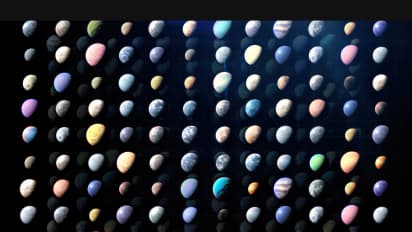
NASA has just crossed a cosmic milestone: 6,000 confirmed exoplanets. These alien worlds — planets orbiting stars beyond our solar system — showcase mind-bending diversity, from lava-covered spheres to planets as light as Styrofoam or shrouded in gemstone clouds.
The tally is kept by NASA’s Exoplanet Science Institute (NExScI) at Caltech, which tracks confirmed planets while more than 8,000 candidates await verification. The achievement comes just 30 years after the first planet around a sun-like star was discovered in 1995.
“This milestone represents decades of exploration that changed how humanity views the night sky,” said Shawn Domagal-Goldman, acting director of NASA’s Astrophysics Division. “Step by step, we’re getting closer to answering the question: Are we alone?”
A universe of strange worlds
- Unlike our solar system, the galaxy hosts planets that defy imagination:
- Gas giants orbiting closer to their stars than Mercury is to the Sun
- Planets circling two stars, no stars, or even dead stars
- Worlds with densities so low they could float in water
- Surfaces of molten rock or clouds filled with sapphires and rubies
- Each discovery helps scientists understand how planets form, evolve, and how common Earth-like worlds may be.
The search for Earth 2.0
NASA’s James Webb Space Telescope has already studied over 100 exoplanet atmospheres, but detecting Earth-size planets requires even more advanced tools.
Upcoming missions like the Nancy Grace Roman Space Telescope and the planned Habitable Worlds Observatory will search for rocky planets in the habitable zone and scan their atmospheres for biosignatures — chemical hints of life.
What’s next?
The pace of discovery is accelerating. It took decades to find the first few thousand exoplanets, but NASA scientists expect thousands more in the next decade thanks to new detection methods like gravitational microlensing and astrometry.
As Dawn Gelino, head of NASA’s Exoplanet Exploration Program, put it: “If we want to find out if we’re alone, all of this knowledge is essential.”