Police Robots Could Patrol Streets by 2031: The Future of Law Enforcement and Public Safety
Synopsis
Humanoid police robots may soon patrol streets, using AI for facial recognition and arrests. Discover the future of public safety and the ethical debates on this new tech.
Police robots that look like human officers may start patrolling streets within the next five years, says Professor Ivan Sun from the University of Delaware. He believes that by 2031, these machines could be able to recognize suspects using facial recognition technology, track them down, and even arrest them.
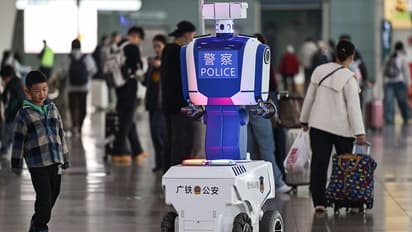
Global police forces are facing increasing challenges due to higher crime rates, organised crime groups, and a decrease in the number of available officers. Professor Sun suggests that robotic officers could help address these issues. Humanoid robots are already in use in China, and he expects other countries to adopt similar technologies soon.
Robotic Policing
According to him, future police robots could scan a suspect from a distance of up to 200 metres to check if they are holding a weapon. These robots would not get tired during long chases and could gather biological and physical information while pursuing someone. Although they might still work with human officers, they could take the lead in dangerous or unpredictable situations, like robberies or armed attacks.
Public Safety and Ethical Issues
He also mentions that human officers may soon use AI-powered helmets to help them make fast decisions during risky encounters. For example, the system could assist in assessing whether force is needed. However, he says that there are important legal and ethical issues that need to be resolved before this technology becomes widespread, especially concerning privacy and the rules about using force.
Professor Sun is currently surveying police officers in several countries, including the UK, to understand their views on robotic policing. His earlier research, published in the Asian Journal of Criminology, looked at how Chinese officers feel about AI-powered robots. The study found growing interest in using robots to boost efficiency, protect officers, and enhance public safety.
Global Robotic Surveillance
Several countries have already tested police robots. In Singapore, the Xavier robot patrols public areas and reports behaviours like smoking in restricted zones. In China, the AnBot robot conducts surveillance and performs identity checks in transportation hubs. In the United Arab Emirates, robots are mainly used to help tourists and provide information during large events.
While current uses are still limited, Professor Sun believes that rapid progress in artificial intelligence means that fully functional robot officers are likely to become a reality in the near future.