Punjab Farmers Turn Crop Waste Into Income as Alternative to Stubble Burning Gains Momentum
Synopsis
A growing rural industry is transforming an agricultural challenge into a source of income and jobs, offering fresh hope for communities while supporting efforts to tackle a long-standing seasonal problem.
A growing network of farmers, biomass processors and power producers in Punjab is helping reduce the practice of stubble burning by turning agricultural waste into a source of income, employment and electricity generation.
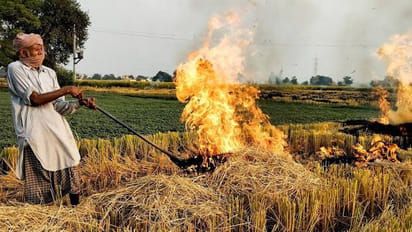
The shift is being viewed as a promising approach to addressing a problem that has long contributed to severe winter air pollution across northern India. Every year after the paddy harvest, thousands of farmers have traditionally burned leftover crop residue to quickly clear fields for the next planting season. The resulting smoke has been linked to the dense smog that regularly engulfs Delhi and surrounding regions during colder months.
For farmer Rajinder Singh, the change has altered the way his village manages crop residue. Instead of setting fire to paddy stubble after harvest, the material is now collected and transported to a biomass power facility where it is used as fuel for electricity production.
According to Singh, the transition has created new economic opportunities for local residents while reducing reliance on field burning. Families that once regarded paddy straw as agricultural waste are now earning money through activities linked to its collection and processing.
Punjab's official figures suggest the approach is contributing to a sharp reduction in farm fires. The state recorded 5,114 stubble-burning incidents during the 2025 paddy harvesting season, representing a decline of 53% compared with 2024 and 86% compared with 2023.
Despite the progress, cleaner air has yet to become a reality in Delhi. Air quality in the capital again deteriorated to hazardous levels during mid-November this year, highlighting the complexity of pollution sources and the limited scale of current biomass operations.
Environmental experts say the concept has strong potential but requires much broader adoption before measurable improvements can be seen across the wider region.
Biomass Industry Creates Rural Employment Opportunities
In Punjab's Faridkot district, a new supply chain has emerged around the collection and transportation of paddy straw. Farmers, machinery owners, transport operators and biomass companies now work together to convert agricultural residue into fuel for power generation.
Participants in the sector say the business is helping support local livelihoods while creating demand for services across rural communities.
One entrepreneur involved in the trade, Amandeep Singh Gill, processes paddy straw into material supplied to biomass power plants. His operation provides work for tractor operators, drivers and labourers, supporting the incomes of up to 70 families.
The business, however, requires significant financial investment. Gill said establishing the operation involved spending approximately 45 million rupees. The enterprise is capable of generating annual turnover ranging between 70 million and 80 million rupees.
The collected residue is supplied to an 18-megawatt biomass power plant operated by SAEL Industries Ltd, where agricultural waste is converted into electricity.
Although the company is the country's largest purchaser of agricultural residue and plans to buy 2 million tonnes this year, that volume remains small compared with the estimated 750 million tonnes of agricultural waste generated annually across India.
Analysts argue that government support could accelerate expansion. Suggested measures include establishing a minimum support price for paddy straw and creating standardized procurement agreements to provide greater confidence for farmers and businesses.
Experts believe such policies could help achieve the government's target of utilizing 10 million tonnes of straw each year. Greater adoption would likely further reduce the number of farm fires across Punjab and neighboring states.
However, analysts caution that while progress has been significant, a much larger industry will be required before reductions in agricultural burning can produce a noticeable improvement in Delhi's air quality. For now, the model is demonstrating that crop residue can offer economic value, providing farmers with a practical alternative to a practice that has persisted for decades.